When reputational repair hits the wrong note.

As the famous chorus line goes in Joni Mitchell’s classic song, Big Yellow Taxi, “Don’t it always seem to go, that you don’t know what you’ve got till it’s gone?”

It is a tune that Ed Sheeran could be forgiven for humming amid the ongoing debacle over his world tour.

After support act Macklemore was withdrawn from the bill for expressing pro-Palestinian views on stage, other artists steadily began to fall away, leaving the pop star with no support. Among those who deserted Sheeran was Finneas, the brother of pop star Billie Eilish, who said in a statement: “Artists must not be silenced when they speak up for the oppressed.”

The departures came hours after Sheeran said he would not be drawn into a public debate over Gaza, and stressed he was not responsible for Macklemore being removed from the tour.

“Macklemore coming off tour was the promoter’s decision, it was not mine,” Sheeran said on Instagram.

“I would never let down the fans who had made plans, nor would I abandon the touring crew and the other support acts and musicians who rely on me for work and to make a living.”

While doing something is usually better than nothing, in Sheeran’s case, this intervention simply made things worse. A closer look at his statement explains why.

“Those who come to my shows do not expect a political forum,” he wrote. “I respect Macklemore’s strength of purpose to stand up and shout for what he believes.

“However, there is room for multiple approaches to the same end: Peace.

“I choose to use my fame and platform to be a place of safety and sanctuary, to maintain diplomacy and keep conversations open, not closed. If we only focus on shouting the loudest, nothing will ever change. There are different approaches to being an advocate for change.”

Without getting into rights and wrongs of Middle East politics, and whether Sheeran should, as Macklemore urged, have taken a stance, what is clear from his statement is it lacked the heartfelt authenticity of the songs that have made him a worldwide star. And having grossed an estimated net worth of £370 million, his fans are clearly suspicious that his renowned way with words failed him at this significant conjecture in his career.

Notably, Sheeran’s Instagram account lost 150,000 followers in the aftermath, while Macklemore’s account soared by 750,000 followers. The rapper also pledged his $1m earnings from Sheeran’s tour to Palestinian aid organisations and challenged Sheeran’s promoter to match him. Faced with the prospect of implosion, both Sheeran and US stadium owner, billionaire Robert Kraft, have reportedly agreed to donate $2m each “to fight this humanitarian crisis”.

With his shambling, dishevelled appearance, and trademark low key checked shirts, Sheeran has never cultivated the image of a global superstar. It’s hard to imagine him on the cover of Men’s Health flashing his abs, a la Justin Bieber. He is also known for his philanthropy, donating his entire wardrobe to charity in 2014 and running a charity providing music lessons to under-18s in his home county of Suffolk.

Against this humble backdrop, his initial sorry/not sorry approach simply didn’t wash, and it remains to be seen whether his actions can speak louder than his previous words.

The first rule of crisis comms is that any intervention should aim for repairing reputation: sometimes that means apologising; on other occasions it means explaining the circumstances to achieve balance; often, it is both. But at the very least, it requires those in the thick of it to act with integrity, own up to any mistakes, demonstrate accountability, and outline clear corrective actions. Without taking these steps, reputation management can quickly backfire and destroy any remaining vestiges of trust.

Ed Sheeran’s Mr Nice Guy image is crumbling, and the damage is becoming serious. After more than a decade of dominating the music industry, time will tell if he can retain his appeal among all but his most ardent fans.

If you’d like to talk to BIG about how we can solve your reputational challenges, please get in touch.

How do you make the energy sector attractive to media?

Ben Palmer, Senior Account Manager at BIG Partnership, looks at how businesses in the north-east of Scotland can tell their stories to the right audience.

The energy sector in the UK supports roughly 1.48 million jobs, around 1 in every 25 people across the country. That’s 1.48 million people, 1.48 million families and 1.48 million stories. Each and every one of those individuals will have a tale to tell about their professional career.

Energy can be a hard story to sell to media, though headlines of the impacts of domestic and global politics on household bills are as commonplace as ever. Negative stories generate negative headlines and those types of stories don’t need to sell themselves to outlets in the same way that a corporation launching a new product might.

But there are important, often more positive stories than bills shooting up, that need airtime too: the technologies driving the energy transition, the research being undertaken that’s shaping the future of the sector, the work being done to ensure that the country’s energy transition is successful. Robert Gordon University’s latest report which warns that the north-east of Scotland risks losing thousands of high-value jobs and critical skills is one excellent example of that.

For those of us in the energy sector – and particularly those of us in this region, who are only too aware of the financial pressures facing the industry – there is a challenge to make such narratives attractive to media. How do you tell a story in a way that cuts through to the audience you actually want to reach?

In our case, the audience is often the Westminster government, whose Energy Profits Levy is widely blamed for the accelerated downturn in the North Sea oil and gas sector and consequently a lack of investment in renewables.

While it may be a story we’re familiar with, the tale of the so-called Windfall Tax is one dogged in numbers: a 78% tax rate, the end of which if brought forward could increase tax receipts from £32.9 billion to £48.6 billion, according to OEUK. It’s important stuff but as a journalist once said to a colleague: tell me what’s interesting, not what’s important.

For journalists, what they really want to hear about is the people behind the sector.

Of those 1.48 million, there will be engineers, offshore workers, supply chain personnel and communities that all have stories which are interesting. But how do you bring this to life?

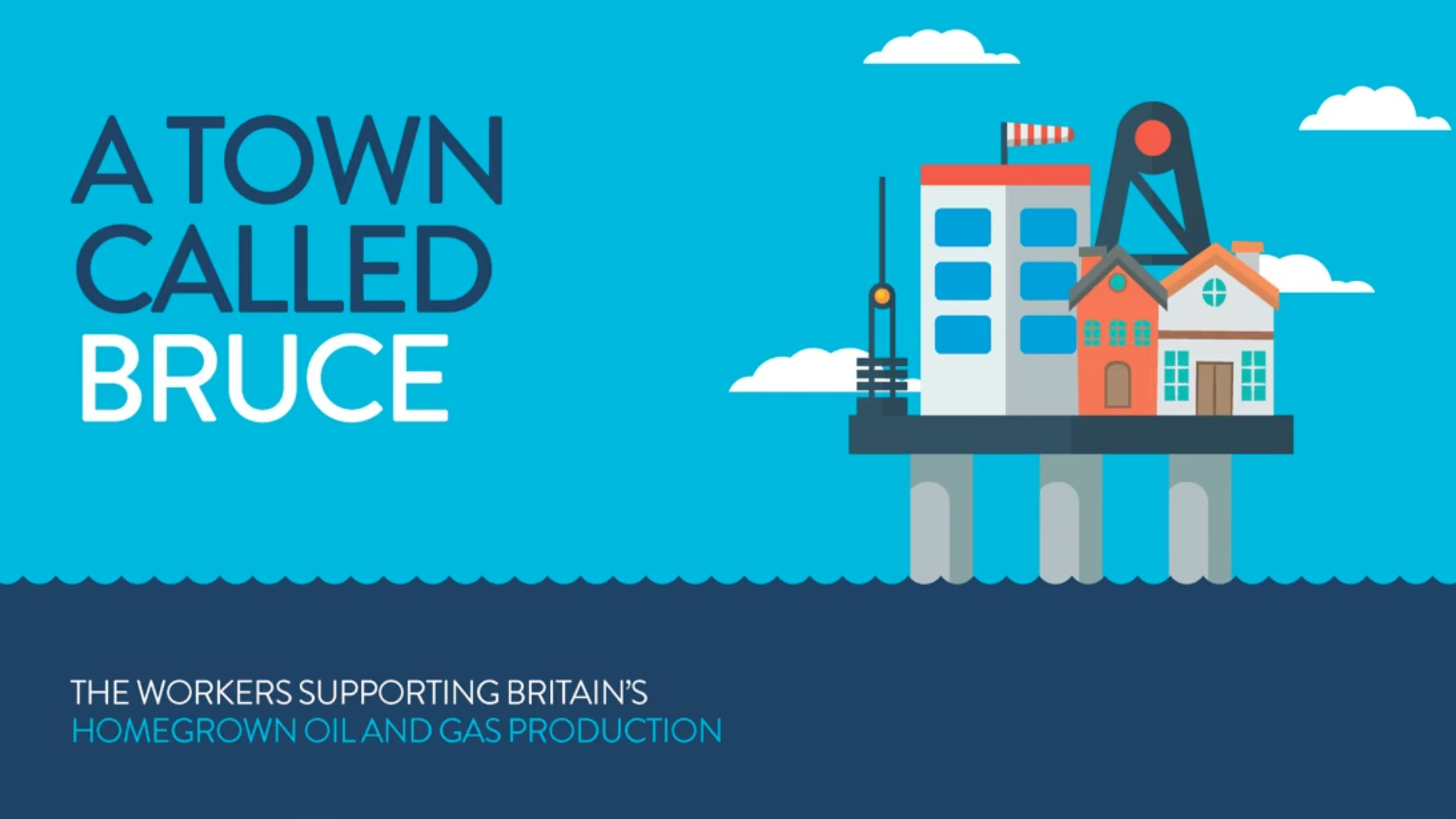
Consider A Town Called Bruce, a campaign designed by my colleagues at BIG which told the story of a town called Bruce, 200 miles north-east of Aberdeen in the North Sea. It’s not a town, obviously, but rather Serica Energy’s Bruce platform, a collection of individual stories brought together on one structure which will be familiar to others across the basin.

Or look at how Dales Marine launched its recruitment drive for new apprentices earlier this year. Interviews with Energy Voice showcased the skills they have learned, their commitment to the sector and why they believe the apprenticeship puts them on a steady and successful career path. Comments directly from source to press without the corporate spin which journalists loathe.

The energy sector has a plethora of stories to tell, but in the wider mainstream news spectrum, it can often be overlooked. Geopolitics, crime and culture may all be ahead in the pecking order but even these serve as a reminder of what’s key to making them intriguing: people are at the forefront of the narrative in each.

If you work in the industry and want your story told, start with your people. Not the megawatts, not the tax rates, not the transition targets. The engineer who came offshore after 20 years in manufacturing. The apprentice who turned down a university place. The supply chain business keeping a community employed. Those are the stories media will take, and they’re the ones that reach the audiences that matter.

If you’d like to talk to BIG about how we can help to solve your business challenges, please get in touch.

Why everyone looks the same on social (and how to fix it)

Why everyone’s feed looks the same (and how to fix it)

You might have noticed over the past few years that brands are all starting to look a little, well, samey. Beauty packaging is stuck in the same Gen-Z bubblegum colour schemes and drinks brands are all cycling through the same CBD-strawberry-matcha mashups. But social media is where the copying is easiest to catch in the act. Open your own feed and you’ll find the same butter-yellow fonts, verbal hooks and Canva template carousels.

Why we’re all copying each other

That’s because we’ve shifted from original thinking to reverse-engineering. Having to keep up with rapid changes in channel algorithms has resulted in us all watching to see what works before running the same format through our own channels. We’re all chasing the same algorithmic wave before it breaks.

Trends are fresh one week, pastiche the next. The thing is, chasing changing platform playbooks isn’t a shortcut to relevance.

What makes a brand feel relevant

The UTA Culture Index report surveyed more than 10,000 brands to find out what makes a brand feel culturally relevant. Durability came out on top, cited by 85% of the general population as the single biggest driver of relevance. Community Engagement was second and Authenticity third. What didn’t make the top of the list: being everywhere, being the loudest, or being the fastest to hop on a trend.

The takeaway? Brands are burning momentum trying to win a competition consumers couldn’t care less about.

Meanwhile the room for any of it to land is shrinking. Ofcom’s 2026 Adults’ Media Use and Attitudes report found that only 49% of UK social media users now actively share or comment (down from 61% the previous year). People are becoming spectators on platforms built for participation. Producing more content in the same visual language as everyone else isn’t cutting through that. It’s adding to a feed fewer people are actually engaging with.

Brands doing it differently

Some brands worked this out early. The fashion house JACQUEMUS built a recognisable social media identity on pioneering surreal, oversized product stunts as well as sharing the founder’s own unfiltered camera-roll shots of everyday beauty. While FFERN treats its seasonal perfume launches like short stories. Their analogue style content means when you view their posts, you feel like you’re sat under an ancient oak tree in dappled sunlight wrapped in scents of bergamot and lemon verbena, (seriously). Both brands are unmistakably original. Unmistakably human. Unmistakably authentic.

How to chart your own course

So, for brands who want to break the cycle, what does that look like in practice?

1. Trust your team to move at the speed of the moment

Anyone who works in social will tell you the Achilles’ heel to their success is the approval chain. Because a reactive idea that needs three rounds of sign-off is no longer reactive by the time it’s live. Give your social team the trust and room to execute on fresh thinking, and back them once it’s out.

2. Treat social as a conversation, not a megaphone

Most brand accounts (and most accounts, full stop) are broadcasting into a feed of other accounts also broadcasting. Instead of screaming into the void, respond to your audience. Ask questions you truly mean. Manage your social accounts as they were originally intended to be: socially!

3. Step away from the feed to find ideas

Scrolling the same algorithmic loop for inspiration returns the same references everyone else is scrolling past too. A walk in nature, a visit to a gallery, or an afternoon at the cinema does more for original thinking than another hour of source material that’s already been recycled twice.

4. Go back to who you’re actually talking to

It’s easy to lose the thread of your customer’s needs under the pressure of filling out a content calendar. Talk to them. Find out what they really want from your products and services. Learn what they’re passionate about. Use this information to form the basis of your thinking. When you understand their pain points, you’ll be able to communicate to them in a way that’s authentic.

5. Find the people your audience already trusts, and work with them properly

Build long-lasting and genuine relationships with influencers and creators. Users are increasingly following individuals with real expertise in a space over brand accounts (for example, financial advice). A credible voice inside a community your brand wants to reach will do more than trying to pigeonhole content formats that don’t naturally align with your brand tone of voice.  

Trend cycles will keep churning, but in the fight to be heard online, it’s the brands that understand a marathon beats a sprint who win in the end.

To talk to BIG about how we can help to solve your social media challenges, get in touch at [email protected]

Building Trust: the SEO lever you can still control

Why trust is the organic lever you can still control

Here’s a number that caught my eye when reviewing the BIG Partnership website performance back in April. Visits that arrive from ChatGPT view 1.64 pages per session. In comparison, organic search sends us 1.20, direct is 1.10, and social sits at 1.00. So, AI referrals may be the newest, smallest, most-hyped source of traffic we have, but crucially it is also the most engaged one we currently track.

That single number captures the shift I want to talk about. AI isn’t just changing how many people reach your website, it’s also changing who they are and how they behave when they get there. And it’s quietly rewriting the rules for how brands get found in the first place.

Search left home

For 20 years, search had one home. You optimised for Google (yes, and the others too, but let’s be real, it was mainly Google), you competed for a spot in the ten blue links, and if you did it well, people clicked through to your site. That world is changing.

Search now happens across a whole ecosystem of platforms. Data from SparkToro and Datos, published in early 2026, puts traditional search engines at roughly 81% of US search behaviour, with commerce platforms taking 10%, social networks 5%, AI tools 3% and 1% across other platforms. The percentages will keep moving. The direction of travel is the point: people discover brands through many front doors now, and a lot of those doors don’t lead to a click on your website.

Even inside that shrinking 81% of traditional search, the click is under pressure. Google increasingly answers the question on the results page through AI Overviews, so the user gets what they came for and never visits a site at all. Ahrefs research from early 2026 found the top-ranking page’s click-through rate is as much as 58% lower where an AI Overview appears.

So here’s the honest summary. There are more places to be found than ever, and fewer of them reward you with a visit. Clicks are no longer the currency. Being chosen by algorithms, AI chatbots and ultimately consumers, is.

Fewer visits, better visits

This is where that 1.64 comes back into play. If AI referrals were low-quality noise, they’d be easy to ignore. They’re the opposite. And we’re not the only ones seeing it: Adobe, drawing on more than a trillion visits to US retail sites, found in March 2026 that AI-referred shoppers viewed 13% more pages per visit than other traffic and spent almost 50% longer on site. Better still, they converted at a rate 42% higher than non-AI traffic.

When someone arrives from the likes of ChatGPT or Claude, an AI has already done the filtering. It’s read the question, weighed up the options and decided your brand was worth naming. The person clicking through isn’t window-shopping. They’ve been handed a recommendation, and they turn up warmer, more informed and further down the purchase journey than a cold searcher poking at ten blue links.

Fewer visits that convert better isn’t a downgrade. For most of the clients we work with, it’s a better deal than the traffic it replaces. The question is how you earn those recommendations in the first place.

AI rewards trust, and trust is built through brand

Here’s the part that should change how you spend your marketing budget. When an AI system decides which sources to cite, amplify or summarise, it leans towards the signals of strong, consistent, well-established brands. It’s trying to answer four questions about you, whether you like it or not.

Who are you?

Can an AI recognise you as a distinct entity, and does it actually understand what you do and what you stand for? This is where a lot of sites fall down. If your own website can’t state plainly what you are, who you’re for and why you matter, in words real people use, you can’t expect a machine to work it out on your behalf.

Where are you?

What does your presence look like beyond your own website? This is the digital estate you can claim and control: your Google Business Profile, your LinkedIn and other social profiles, Glassdoor, Trustpilot, the relevant industry directories and listings. Every one of these is a place you can put a consistent, accurate version of who you are, and every one gives an AI another reference point that says you’re a real, established organisation. Claiming and maintaining them is some of the most straightforward trust-building work you can do.

Who trusts you?

Are credible, independent sources talking about you? Third-party mentions, coverage and reviews you didn’t write are the proof a machine reads as other people taking you seriously. You can invite them and make them easy to leave, but you can’t manufacture them, and that’s exactly why they carry weight.

Does it all connect?

Is your identity consistent enough that the machine can join the dots with confidence? A machine is constantly cross-referencing the picture you paint on your website against your profiles, your listings and what others say about you, looking for a consistent, verifiable story. Different company descriptions, an old address here, a name variation there, a positioning that’s moved on everywhere except the places you forgot to update, and the whole thing gets harder to trust.

None of that is new. What’s new is that these trust signals now feed directly into machine-readable visibility. Brand is no longer only about how people feel. It’s about whether an algorithm can verify you well enough to put your name in front of someone.

That reframes trust from a soft objective into the most powerful organic lever we can still control. We can’t control Google’s algorithm or ChatGPT’s training data. We can control how trustworthy, consistent and well-attributed our brand looks to the systems doing the choosing.

Five ways to start building it

Here’s where I’d begin:

1. Put your people front and centre.

Audiences trust people more than logos, and so, increasingly, do the machines. When your employees share their expertise and their working lives, it signals an authenticity no campaign budget can manufacture. Pick three to five genuine voices, build proper author profiles for them, and give them a content brief rather than a script.

2. Make room for your customers.

No brand voice is as convincing as a customer who had no reason to be nice. User-generated content gives AI systems and search engines the third-party proof that your own copy can’t replicate. Invite it and make it easy for your customers to get involved.

3. Treat reviews and case studies as infrastructure.

They live exactly where your audience looks before they commit, and AI systems actively surface this kind of independently-attributed content. This isn’t a nice-to-have on a quiet quarter. It’s the proof that you deliver what you promise.

4. Put a name to everything you publish.

Nameless content earns no authority. Google’s E-E-A-T guidance and the AI systems that echo it reward content attributed to identifiable experts with real credentials. Add author bylines to every article, write proper bio pages that set out each person’s focus and credentials, and use Person schema so the machines can connect the author to the work.

5. Keep earning coverage.

Being talked about isn’t vanity. It’s how the machines confirm you exist. Press coverage and brand mentions create the off-site footprint that tells search and AI systems you’re a real, recognised organisation. This is the point where PR and SEO stop being separate budgets and start being the same job.

The lever worth pulling

We’ve written before on this blog about trust as the thing that makes choosing easier for people. Our Strategy Director, Paul Hadfield, recently tackled the question “Are you making your brand easy to trust?”, and I previously discussed the ever-growing case for combining SEO and PR. All of that still holds and the direction of change is continuing.

The brands that win the next few years won’t be the ones chasing every new platform or waiting for an algorithm update to rescue them. They’ll be the ones that stop treating search, PR, content and brand as separate budgets with separate goals, and start running them as one job with one aim: being a source worth trusting.

The digital world has changed. Trust is how you stay found in it.

To speak to our digital team about how we can help you to solve your SEO challenges, get in touch at [email protected].