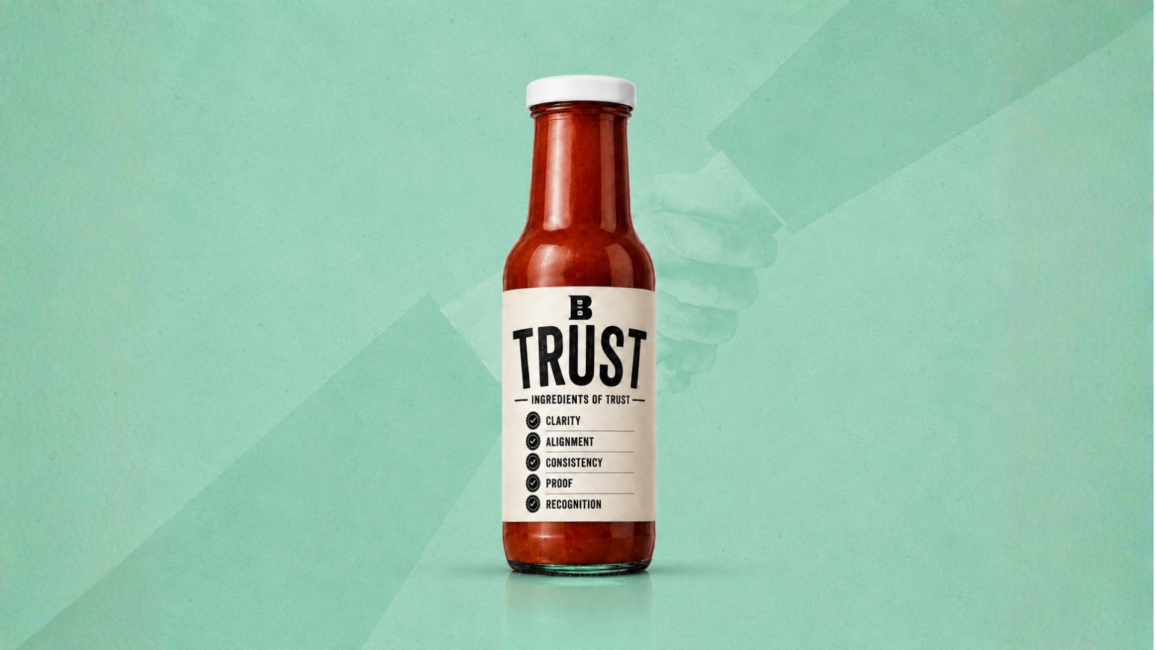
Trust is one of those words brands love to use.
The problem is, saying it does not make it true.
Trust is not something a business can simply claim – it’s something people build up over time, based on what they have seen, heard and experienced.
And it has never been easier for brands to lose people. There are more channels, more content, more messages and more information fighting for attention, but less patience and less time to care. Confusion is costly.
If your brand is unclear, inconsistent or unfocused, people will not spend long trying to work you out. They will move on to something easier to understand – and easier to trust.
Trust makes choosing easier for consumers. That, in turn, makes it commercially valuable for businesses.
People do not have the time or inclination to evaluate every available option in forensic detail, so they rely on trust-based shortcuts. They choose brands they recognise, understand, have heard good things about or have already had a positive experience with.
A trusted brand is easier to choose, easier to recommend and easier to return to. People are also more likely to stick with it and forgive it when something goes wrong.
Where trust starts to break
Many brands are harder to trust than they realise. They are too vague about what they do, too internally focused in how they talk about it, too inconsistent from one channel to another or too similar to everyone else in the category. Some keep changing direction before people have had a chance to understand them in the first place.
And trust does not usually disappear in one dramatic moment. It is built or eroded in the small stuff. Through the clear, consistent experiences people have across every touchpoint, from the website and sales call to the invoice, delivery and response when something goes wrong.
A brand can say it is helpful while its website makes life harder. It can call itself human while its service feels robotic. It can talk endlessly about innovation while the experience feels ten years out of date.
When the gap between what a brand says and what people experience becomes too wide, trust starts to break.
Put your brand to the test
So, how do you know whether your brand is genuinely easy to trust?
At BIG, we use a simple trust test when we start working with a brand. It looks beyond what an organisation claims and asks whether the business is making its promise clear, believable and consistent across the whole experience.
It comes down to five questions:
1. Clarity: Do people know what you stand for?
Ask three people in your business what the organisation stands for and you will often get three different answers. That is a problem, because people cannot trust something they do not properly understand.
Your audience should be able to grasp what you do, why you matter and what makes you worth choosing without decoding a wall of corporate language.
Clarity is not about dumbing things down, it’s about making the important parts easy to understand. If a potential customer could not explain your business after visiting your website once, the brand is making them work too hard.
2. Alignment: Would your people say the same thing?
Trust slips when the leadership team tells one story, the sales team tells another and the customer experience delivers something else entirely. Alignment starts inside the organisation.
Your people need a shared understanding of what the business stands for, how it creates value and what kind of experience it wants to provide.
That does not mean giving everyone a script, but having a clear North Star gives the business one organising idea, so different teams can express the same brand naturally through what they say, do and prioritise.
3. Consistency: Are you recognisable across every touchpoint?
Great brands are surprisingly repetitive. It might not sound glamorous, but repetition is how they become familiar, understood and trusted.
Consistency does not mean repeating the same thing everywhere or making everything look identical. It means every interaction feels as though it came from the same place.
Your website, advertising, emails, sales materials and customer service can all do different jobs, but they should still feel connected. When every channel behaves like a different business, people must keep reassessing who you are.
4. Proof: Are you demonstrating it through experience?
Brands spend a lot of time deciding which words they want to use about themselves. Helpful. Expert. Friendly. Innovative. Reliable. But people are far more interested in whether the experience proves them true.
If you say you are easy to deal with, how simple is it to contact you? If you say you care about customers, what happens when one has a problem? If you say quality matters, where can people see and feel it? Trust grows when the promise and the experience reinforce one another.
Brand can make the truth easier to see. It cannot manufacture it.
5. Recognition: Are you distinctive enough to be remembered?
Being clear and consistent is important, but it will only get you so far if the brand is impossible to pick out from the category.
If you look, sound and behave like every competitor, people will struggle to remember who said what. Distinctiveness gives them something to hold on to, whether that comes from your visual identity, tone of voice, attitude, point of view or customer experience.
The aim is not to be different for the sake of it. It is to be easier to recognise, easier to recall and easier to choose.
Trust is a pattern, not a message
That is what the trust test is really measuring. Not what you claim in one campaign, but the pattern created by every interaction.
Clear. Aligned. Consistent. Proven. Recognisable.
So, the question is not whether you tell people your brand can be trusted. It’s whether you are making it easy for them to believe you.
To put your brand to the test, get in touch: [email protected]