Onshore Wind: Communication is the Missing Piece

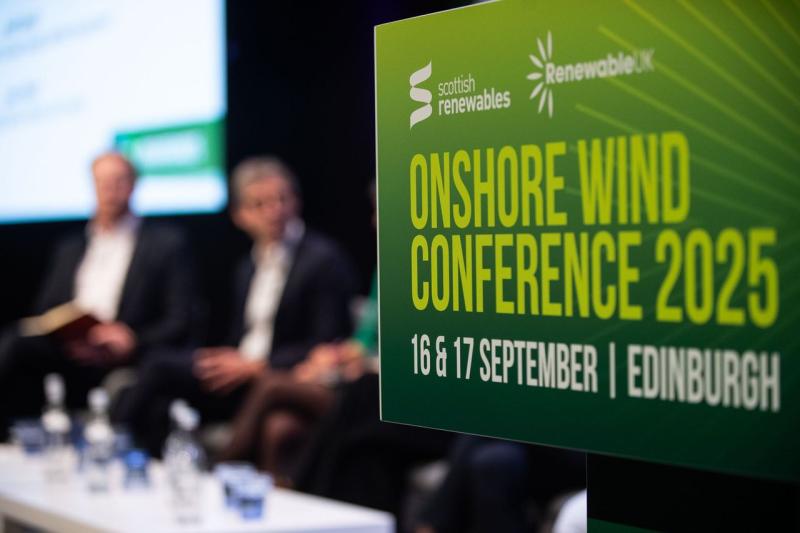
The Scottish Renewables Onshore Wind Conference 2025 brought the sector together at a crucial moment. With political headwinds, grid bottlenecks and public scrutiny on the rise, the industry is being asked to deliver more, faster and at greater scale. One theme ran through every discussion: if we want to unlock the full potential of onshore wind, we have to talk about it better.

Politics, Policy and Perception

The political environment is increasingly challenging. Negative sentiment from Reform UK, coupled with anti-wind rhetoric overseas, is shaping public debate and creating uncertainty at home. The to-do list is long, but there are positives. The rejection of zonal pricing was a win for fairness. Repowering older sites offers a chance to boost output without starting from scratch. Co-location with other technologies can bring new flexibility. The sector is clear on what needs doing: aim high, unblock projects and sort the grid.

Winning Hearts and Minds

Yet perhaps the most urgent challenge isn’t technical – it’s cultural. Public dissent is growing. Communities are asking tougher questions about what onshore wind means for landscapes, lifestyles and local economies. And they deserve answers.

This is where communication matters most. The sector must do more than just state its benefits. It must showcase them.

  • Affordability: Onshore wind keeps bills lower.
  • Security: It strengthens energy independence and resilience.
  • Climate Action: It reduces emissions and supports national targets.
  • Local Value: Projects create jobs, investment and community funds.

It’s not enough to tell people onshore wind is competitive. We have to show them through real stories, visible benefits and honest conversations.

Communication as the Superpower

Onshore wind is one of the UK’s cheapest and most reliable energy solutions. It has the potential to transform our energy system, create jobs and strengthen resilience. But none of that will happen at the speed we need unless we get better at talking about it.

The conference made one thing clear: technology, policy and planning are vital, but communication is the missing piece. It’s the superpower that will decide whether the sector can overcome political turbulence, accelerate delivery and secure public support. Onshore wind has the projects. It has the know-how. Now it needs the voice.

SPE Offshore Europe proved that the UK’s energy sector is ready for the transition – now it’s time for government to make that possible

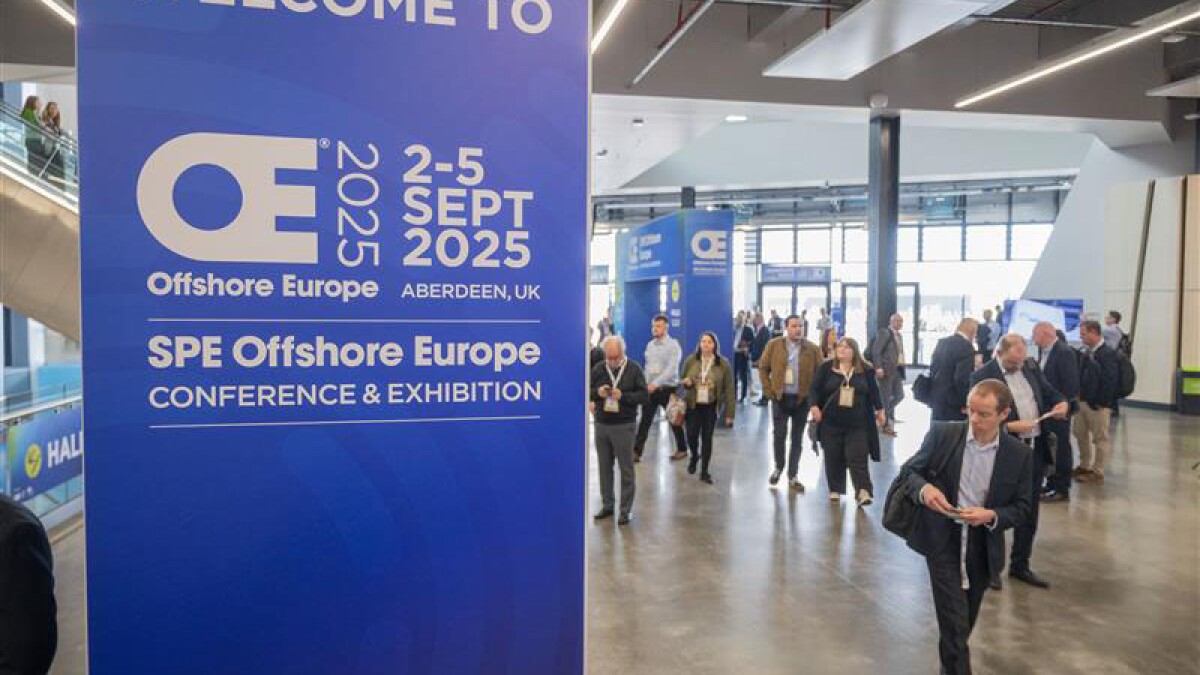
As helicopters buzzed overhead on their way back and forth from North Sea platforms and thousands of delegates shuffled around the grounds of P&J Live, you’d be forgiven for thinking that Aberdeen is a city in its pomp. Even the Scottish Cup trophy made an appearance at SPE Offshore Europe (OE).

But it is not the eighties anymore. The North Sea is not the oil and gas hotspot it once was and, even if Aberdeen FC did win the Scottish Cup earlier this year, Alex Ferguson is no longer leading the local football club to continental dominance.

The halcyon days are over. Once a conference of excess where oil and gas professionals filled their pockets with freebies before indulging in what Aberdeen’s night life had to offer, OE is now instead a meeting of pragmatism.

Let’s cut to the chase: there’s a conflict at the heart of the UK’s energy sector which is inhibiting it. The oil and gas firms which once made abundant profits out of the North Sea are now strangled by the vice like grip of the Energy Profits Levy (EPL). Investment is being curtailed, jobs are being lost and the money that could be used to drive the energy transition is not being generated. It is no surprise that one of the strongest images of the conference was that of a room of raised hands, after OEUK chief executive Dave Whitehouse asked the audience to do so if they knew someone who had lost their job in recent months.

The people and the companies who make up the world-leading supply chain around Aberdeen are committed to reaching net zero by 2050, but policy isn’t allowing them to kick this movement into overdrive.

At a dinner on Tuesday night, DNV’s UK and Ireland chief Hari Vamadevan made the point that by mid-century the country will still require between 13 to 15 billion barrels of oil equivalent (BOE), with anywhere between 2.5 billion and 4 billion coming from the North Sea. Analysts estimate that there is anywhere between 8.5 and 11 billion BOE left in the ultra-mature basin.

The message, therefore, was simple: we’re still going to be using oil and gas by 2050, so why not use our own cleaner resources rather than carbon intense LNG imports? It made for a compelling case for Labour to shift its stance.

Of course, a line of politicians made their way to the north-east of Scotland to show their support to the beleaguered sector. Conservative leader Kemi Badenoch shifted the party’s standing closer to that of Reform’s and to ‘Drill Baby Drill’, but that sort of headline grabbing move didn’t cut much mustard with the sector experts who recognise that North Sea reserves are limited. The SNP’s Kate Forbes – who will step down from her role as an MSP next year – made the point that leaving people and jobs behind is not a transition, but a “betrayal”.

Michael Shanks, the Energy Minister, was the key Labour figure in the Granite City, and delivered a speech on the Tuesday of the conference stressing that the UK government will back the region and its workers. Encouraging policy in areas such as CCS, hydrogen and offshore wind send the right signals but won’t release the sector of the fiscal handcuffs it finds itself in.

Keir Starmer, meanwhile, also made a recent trip to Scotland, making it as far north as Glasgow to highlight Norway’s purchase of five new British warships. The Prime Minister returned to London without taking any questions from the Scottish press pack.

Perhaps it was entirely coincidental that, while the conference was in full flow, Rachel Reeves announced that the Autumn Budget will take place on November 26, but the timing could not have been more pertinent. For the companies who invested the time and resources in making OE a success, they will hope that the statement will unveil tax policies that enable an acceleration of the transition. Independent Wood Mackenzie analysis, unveiled during the conference, emphasised that investment attractiveness “hangs in the balance”. It also provided several key design elements that would make for an effective mechanism. The industry is full of people willing to provide logical, fair answers.  

If SPE Offshore Europe 2025 proved anything, it’s that businesses are ready to step up. The people, the technology and the willingness is there. It is homegrown and it’s on our doorstep. It’s now over to government to create the environment that allows it to flourish.  

Has Labour struck the right energy balance between the UK’s green ambition and oil & gas reality?

Ahead of SPE Offshore Europe, BIG Partnership’s Head of Energy, Richard Crighton, analyses the state of play in the UK’s energy sector.

When Labour swept to power last year, it did so on a platform of transformative ambition. This included the promise to turn the UK into a clean energy superpower while navigating the economic and social complexities of a just transition. There was a commitment to end new oil and gas licences in the North Sea and accelerate investment in renewables through the launch of Great British Energy, a publicly owned energy company.

Twelve months on and off the back of several damaging U-turns in other policy areas, energy has been one domain where the strategy has largely remained on course. But has Labour successfully delivered on its green agenda without undermining the vital role of the oil & gas industry – an industry still critical to the UK’s economy, energy security and global competitiveness?

Ambitious green reform

Labour has taken significant strides toward decarbonisation. Central to its programme has been the establishment of GB Energy, headquartered in Aberdeen, with a remit to invest in homegrown renewable energy projects.

Backed by an initial £8.3 billion, it has begun funding large-scale solar, offshore wind and grid-scale battery projects. However, questions remain about the full scope of GB Energy as budget pressures bite across the board.

The government has pushed on energy efficiency, planning reforms and community energy schemes for funding and support. New strategies on solar and onshore wind have also been published during the summer.

Renewable generation reached record highs over the past year, and new investment commitments in clean energy technologies are underway. Labour’s green jobs plan has also started to take shape, with training and skills programmes announced in regions historically dependent on oil & gas.

However, the window of opportunity for delivering a just transition is closing.

Backing the backbone of energy: a stronger case for oil & gas

For all its green progress, Labour has faced criticism for its position on the oil & gas sector. The continuation of the Energy Profits Levy and the pledge to halt new exploration licences has created uncertainty, particularly in the north east of Scotland, where oil & gas supports approximately one in six jobs and provides a critical engine for economic activity, export earnings and technical innovation.

The UK’s oil & gas industry stands as a world-class sector that underpins the very success of the country’s net zero ambition. It provides revenues that support green investments as well as supplying the engineering, infrastructure and workforce capability required to scale up carbon capture and hydrogen production. The sector must be seen as a partner, not a problem.

While Labour has reiterated that existing licences will continue and that production decline will be managed, it must now go further. Approving projects like Rosebank and Jackdaw is a positive signal, but the UK must resist policies that prematurely shrink the basin or drive away investment to other regions.

The government has made welcome moves in supporting carbon capture, utilisation and storage (CCUS), with backing for projects like the Acorn scheme in Peterhead. These kinds of investments will only succeed if they are supported by a confident and capable oil & gas supply chain – one that is not eroded by mixed signals on taxation and licensing.

Countries such as Norway and the Netherlands have shown that it is possible to champion both renewables and responsible fossil fuel production. The UK should do the same, or risk ceding economic advantage and global influence in energy transition leadership.

A recent report from Robert Gordon University warned that the UK could lose tens of thousands of offshore energy jobs by 2030 unless it acts swiftly. In the report’s low-case scenario, the North Sea oil & gas workforce could shrink by as much as 400 jobs every fortnight over the next five years. This isn’t just a warning, it’s an urgent call to action.

Collaboration over conflict

Labour’s first year in government has aimed to bridge the divide between climate urgency and economic continuity.

A more pragmatic path recognises the co-dependence of these sectors and the opportunity to build an integrated energy system that draws on the UK’s full industrial strengths. This means reforming fiscal policies that discourage long-term investment in hydrocarbons, providing clear timelines for energy transition infrastructure and accelerating planning approvals for both oil & gas and renewables.

As Ed Miliband outlined in his keynote speech at the Global Offshore Wind conference, clean energy development should be a “mission-led partnership” between government, industry and workers. This mission must also include those currently delivering the UK’s energy needs as well as those who will be key to delivering its future ones.

What comes next

The weeks in the lead-up to the Autumn Budget will be pivotal. Labour must now cement its commitment to an inclusive energy strategy that doesn’t pit one sector against another but instead harnesses the strengths of both.

At SPE Offshore Europe, industry leaders, policymakers and the energy workforce will gather in Aberdeen to discuss how to unlock the investment and collaboration needed for a resilient transition.

The UK has the potential to lead the world not just in clean energy but in showing how mature oil & gas sectors can evolve, adapt and enable a low-carbon future.

BIG will be at the heart of these debates, supporting the event as well as numerous clients. Get in touch to see how we can help you shape your role in the future of energy.

Why brands should think twice before taking part in viral trends

We live in a world where everything is content. A gesture, a joke, even a hug on a jumbotron can become front-page news before you’ve had time to process it. Just ask Andy Byron, now-former CEO of Astronomer, who resigned last weekend after a viral video taken of him and a colleague at a Coldplay concert threw his personal life, and professional future, into chaos. 

This wasn’t a campaign. This wasn’t a PR stunt. This was a human interaction, broadcast live, turned into a meme and then into a moral drama played out on social media and global news sites. And just like that, the whole world knew about it. 

Within 48 hours, memes were everywhere. Some brands, eager to prove they are up-to-date with the latest trends, started referencing the moment with jokes, mocking videos and recreations. While some found clever or light-hearted ways in, others risked engaging without fully understanding the context. And that’s where the real risk lies. 

As hard as it is for a comms person to say – not every trend is a marketing opportunity. 

In the rush to stay relevant, it’s easy to mistake virality for value. But just because something is being talked about doesn’t mean it’s appropriate for every business. A private incident becoming public doesn’t automatically make it something every business should jump on. There’s a difference between tapping into a trend and capitalising on someone else’s crisis.


The situation shows how one out-of-context situation can explode into a career-ending controversy – especially when brands and media outlets amplify it without perspective. When a moment becomes a meme, the people in it are often dehumanised in the process. 

Before joining a viral trend, brands should ask themselves: 

  • Are the circumstances sensitive, unresolved or controversial? 
    If there’s any doubt, pause, or at the very least, proceed with care. 
  • Are there innocent parties who could be negatively affected by this (e.g. children) involved – and are they at risk of harm? 
    If the trend centres on an identifiable person, remember: they’re not a character, they’re a person. 
  • Do we understand the context fully? 
    Acting without context is a shortcut to backlash. 
  • Can we add value, not just volume? 
    Engagement should mean more than just jumping on a bandwagon. Can your brand offer insight, compassion or a fresh, constructive take? 

f there are any doubts, maybe the right move is to sit this one out. 

That said, there are ways to engage thoughtfully. Some brands find ways to contribute humour or perspective without targeting individuals or exploiting pain points. Done with care, participation can still feel relevant – without feeling opportunistic. 

This incident and the response teach us to keep humans at the centre of our marketing, they’re the people who we’re speaking to but they’re also the people who are potentially affected by a viral trend – families, partners, colleagues.  

The power of feeling: Why emotion matters in branding

In this long-read, our Marketing Services Account Director Ross Molloy takes a detailed look at why communicators – especially those in B2B – should ignore feelings at their peril. Read on for his research-led insights and practical tips at the end on how you can leverage human connection for your organisation. 

“The best thing a company can do is protect its brand. A strong brand is a barrier that protects the business from competition.”  It’s a quote that’s been attributed to investor and philanthropist Warren Buffett; whether he said it or not, it’s one marketing and comms teams should always keep front of mind.  

And never has it been more the case than right now.  

In 2025, companies that recognise their brand is more than just a logo stand to be the big winners. Emotional storytelling is a competitive advantage. By designing communications that evoke joy, trust, nostalgia, humour or belonging, brands can enhance engagement, strengthen recall and, crucially, command premium pricing.  

Forging an emotional connection with audiences is not a new trend, but it has been taken to new heights by Nike with its powerful return to the Super Bowl ad scene earlier this year following a 27-year hiatus.  

In today’s increasingly crowded marketplace, emotion is the key to capturing attention, influencing decisions and fostering loyalty. A brand now must embody personality, values, promises and trust. 

With what was its first commercial for the Super Bowl since 1998, Nike’s return to this strategy with So Win marked a new dawn in brand building and emotional storytelling to a mass live audience. Since the Covid-19 pandemic, Nike has largely relied on direct-to-consumer promotions and digital membership initiatives, but why is this switch, led by CEO, Elliot Hill, important?   

Shifting from short-term gains to sustainable growth  

After heavily investing in e-commerce and tactical sales promotions, Nike experienced a drop in brand value to $29.8 million in 2024 against $31.3 million in 2023. An over-reliance on passive, targeted media, focused on fact-heavy messaging aimed at converting already-interested consumers, contributed significantly to the decline.  

This prompted Nike to choose generating future demand and short-term activation to convert existing demand, rather than choosing one over the other. The shift fuelled Nike’s strategic decision to seize a moment watched by millions, like Super Bowl 59, to reignite its brand mojo. 

Showmanship over salesmanship  

Focusing too much on features and not enough on storytelling can make the brand feel less memorable and harder to relate to. Branding expert and the founder of ‘eatbigfish’ Adam Morgan described this pitfall in “the extraordinary cost of dull” (Warc, 2023) and explained that uninspiring campaigns require excessive media spend to achieve the same impact as an emotionally compelling one.   

Research consultancy System1 echo this in analysis of 1,700 ads across six B2B categories and found that:  

  • 77% of all B2B creative scores 1 out of 5 for creativity; 
  • Only 0.5% scored 4 or 5; 
  • And 90% of content was forgotten within 48 hours. 

Content is everywhere and with attention harder to grab now than ever before, brands must be smart about where and when they show their messages. They should aim to show up in the right places, at the right times, when people are most engaged. 

Brands winning with emotion  

And Nike isn’t alone in playing to how people feel. Many brands across different industries and categories are dialling up emotional communications to differentiate themselves and stand out.  

A Town Called Bruce, is a campaign produced by BIG for Serica Energy. Focusing on a close-knit community of over 300 workers and their vital role in national energy security, the film and supporting brand materials use emotional storytelling to spotlight the lives of workers on the Bruce offshore platform, which processes nearly 5% of the UK’s oil and gas production. Designed to humanise the industry and appeal to public empathy and pride, the campaign uses real voices and stories to highlight the risks posed by current government policies to both jobs and domestic energy production. 

McDonald’s Famous Orders taps into nostalgia and personal connection by showcasing the go-to order meals of celebrities, making the brand feel more personalised and culturally relevant.  

Guinness Presents: A Lovely Day considers a world so polarised and divided with an ad that reframes our perspective on difference and promotes the benefit of finding common ground together. That unity starts with raising a glass, together.  

Rory McIlroy’s career grand slam is captured in a long-form social video that re-creates his rollercoaster final Masters round on 13 April when he fulfilled his childhood dream and made history by joining only five other elite golfers who have won the career Grand Slam of all four Majors. The timelapse highlight reel brings you through all the highs and lows, setbacks and near misses, restarts and comebacks on the long 11-year journey to victory since he won his last Major. It’s not just a celebration of athletic excellence: it’s a catalytic sporting moment, one that reignites belief, stirs global admiration, and shows the power of persistence under pressure. A masterclass in storytelling, this video is emotionally led communications in its rawest form – timely, motivational, and unforgettable feeling. 

Currys’ social strategy on TikTok zigs when everyone else zags, using original humour through its in-store staff to stand out in the electronics category. It’s distinctive, meaningful, culturally in sync and, most of all, is delivering impressive results, garnering millions of organic views, enabling the brand to reach a much broader audience on TikTok.      

Emotion is not restricted to the B2C world. In fact, it can be even more strategically important when applied to longer buyer journeys, where trust matters more than features, capabilities and/or price. The “We Bring Companies & Customers Together” campaign by Salesforce highlights the emotional connections between businesses and their clients, reinforcing trust and success rather than just selling CRM software.  

The business case for emotional branding  

Emotion isn’t just about making people feel good – it delivers measurable business results:  

  • Emotional differentiation drives pricing power whereby consumers display 30x higher willingness to pay more (Think with Google).  
  • Emotive messaging significantly influences B2B purchasing decisions, with a strong emotional connection accounting for 56% of the final decision (Why difference matters for B2B marketers – Kantar, 2024).  
  • 5.3x higher brand consideration and 12.8x higher purchase intent (Think with Google).  
  • Emotionally engaging adverts generate 2.4x greater sales impact (ThinkTV).  
  • B2B buyers are 50% more likely to choose brands they feel connected to (Google & CEB, HBR).  

Measuring the impact of emotional branding  

Traditional metrics such as message delivery and brand linkage fail to capture emotional resonance. Modern measurement tools quantify emotional effectiveness:  

  • System1 assesses creative effectiveness through emotional impact and brand recognition.  
  • Nielsen Neuroscience tracks neurological responses to gauge engagement.  
  • Kantar’s framework evaluates emotional appeal and audience response.  

Takeaways for marketers  

  1.  Deliver short-term targeted tactics aimed at converting already‑interested consumers using factual messaging and special offers.  
  2. Support this with ongoing brand positioning campaigns, reputation management and community engagement to create future demand and lasting value. Invest in distinctive brand assets to trigger emotional connections and make a brand stand-out over time.  
  3. Prioritise high-attention environments and moments where prospective buyers are attuned to what you have to say. Use creativity, multiple channels and mixed formats to maximise memorability.  
  4. Implement a robust measurement system to track emotional engagement and its impact on creative effectiveness and brand performance.  
  5. Maintain creative consistency across campaigns to reinforce brand identity and maximise long-term return on investment.  

Election 24: The middle way is the muddle way

In this guest post, Jason Rose, former Head of Media for the Scottish Greens, gives his perspective on how TV appearances and photo ops are affecting the parties’ chances.

It’s a Westminster election so devolved topics should be off limits. Other than lobbying the UK Treasury to spend more (good luck with that), there’s not much a Scottish MP can do about the NHS or schools north of the border. But this is what the public say they care most about, so that’s what the parties want to talk about and what the media end up covering. As the newspaper editor in the Man Who Shot Liberty Valance said, when the legend becomes fact, print the legend.

So while our press and airwaves are filled with discussion of issues that Scottish MPs won’t be doing anything about, what can also help win votes is tone, how you come across. That’s where TV appearances and photo ops come in.

The Tories chose Silverstone for their launch. Metaphors of car crashes abound. Labour occupied a could-be-anywhere corporate building in Manchester, suggesting they are ready for the boardroom. The SNP appear to be pitching John Swinney as an everyman, by meeting and greeting real people, including getting his kilt on and downing steins in Munich with the Tartan Army. Meanwhile, I saw the Greens visiting a distillery where a small glass of something fiery was raised by the small and fiery Patrick Harvie. As for the LibDems, they have doubled down on wacky stunts, in marked contrast to Ed Davey’s incredibly moving and highly personal story used in their party election broadcast. Is the message that he is human? If so, they’ve nailed it. 

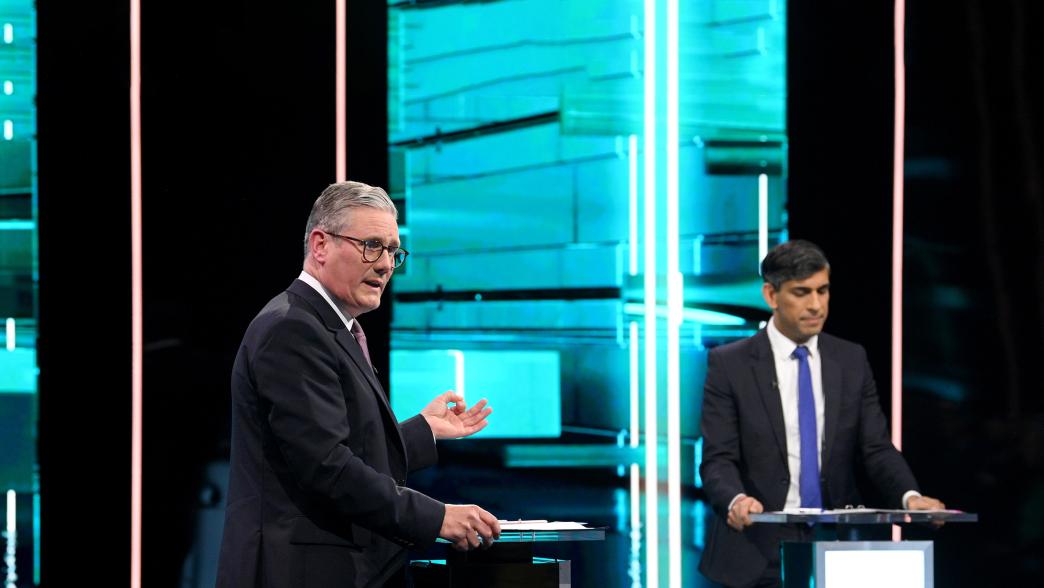
My teenage daughter’s perspective is instructive – she’ll be voting at the Holyrood election in less than two years’ time. Her sense is of a contest between Rishi and Keir – that’s the coverage analysed in the school debate club, and that’s the narrative she’s overheard from the radio that is always on in our kitchen. She has found it hard to shake off the sad image of Rishi calling the election while slowly getting soaked, while she has found it hard to form any opinion of bland (her word) Keir.

The most interesting TV moment so far, in my view, has been the SNP’s decision to embrace the middle way on oil and gas. On BBC Question Time, Kate Forbes said oil and gas licences would be climate-compatibility assessed case by case, leading to laughter from the audience, a haranguing from presenter Fiona Bruce, and applause for an audience member who said: “We’re in a crisis in both climate and nature – let’s start talking about it seriously.” 

Kate seemed pleased to be “in the middle” between Labour and the Conservatives, but it’s a muddle that simply pleases no-one. You either believe the scientists and the economists and leave the stuff in the ground while ramping up the alternatives, or you embrace the ‘This is fine’ fire-engulfed cartoon dog meme. It’s hard to imagine Nicola Sturgeon, for example, fronting the current position. It will be interesting to see if the SNP change tack as those with a clearer message press their advantage.

For many of us, this election is simply an appetiser for Holyrood 2026. The scale of Labour’s success this July will be key to any sense of momentum. Even if it’s close, say Labour 25, SNP 24, as the latest Survation MRP poll suggests, that will be enough to start the big ball rolling, with John Swinney as Indiana Jones. Now that would be a photo op.

Energy policy in the eye of the storm

In a room filled with industry colleagues, investors and policy watchers, the timing of a members-only session in Inverness last week with Chris Stark, Head of the UK’s Mission for Clean Power, could not have been more critical.

Sentiment in the sector has taken a knock, with Ørsted’s recent withdrawal from the Hornsea 4 offshore wind project casting a long shadow over proceedings. The developer said the 2.4 GW project has faced rising supply chain costs, higher interest rates, and increased construction and delivery risks since the Contract for Difference (CfD) award in Allocation Round 6 last September.

Harbour Energy, the UK’s largest oil and gas producer, had also said on the morning of the event that it would cut 250 jobs in Aberdeen, blaming regulation and “punitive” government measures. It is yet another huge blow to the offshore industry.

Conversations before and after the event were laced with concern about market conditions, infrastructure constraints and wavering investor confidence. It’s clear that many in the room felt the weight of growing uncertainty.

But Chris Stark tried to strike a different tone.

Without glossing over the challenges, he acknowledged the difficulties and disappointments, including the impact of US policy shifts on renewables, but made a compelling case for optimism. His message was that the UK is still firmly in the race to become a clean energy superpower, and that Scotland has a pivotal role to play.

What stood out was his emphasis on the “quiet business” of Mission Control: working steadily, building alignment with the Scottish Government, and focusing on the long-term wins. Stark spoke of reaping real economic rewards through power system investment, grid upgrades and port revitalisation. He reminded us that while the critics are growing louder, the most powerful responses are progress and proof.

We were told that Mission Control is not making too many headlines about the successes. But at a time when net zero and the benefits of implementing clean technologies are under attack – that needs to change. It is an opportunity to highlight once-in-a-generation investment in the UK’s energy infrastructure. Real jobs being created. Real emissions being cut. Real value added to communities.

But we can’t rely on government alone. If we want to shift public sentiment, attract investment, and secure a resilient energy future, then as a sector, we need to get on the front foot.

We need to come together – developers, supply chain, government and communities – to make the strongest possible case for renewables. That means clearer communication, more visible leadership and more collaboration. The conversation will no doubt continue in Glasgow this week at the All-Energy conference with delegates set to hear from senior figures from the UK and Scottish Governments as well as industry heavyweights.

Stark insisted that the “secret sauce” in all of this is infrastructure. That means the ports, grid and a stable policy environment. But another vital ingredient is unity. Not just around climate goals, but also energy security, economic opportunity and the role renewables play in delivering both.

A colleague attended a Holyrood celebration of bp’s 60 years in the North Sea and fed back that despite the headwinds facing the sector there was a sense that it has met and overcome many challenges over the years, with one person even saying they were looking forward to the 70th anniversary in another decade.

It shows that even in a global storm, we can be a safe port. But only if we work together to build it.

Richard and other members of the energy team will be attending All Energy 2025. Get in touch to arrange a coffee.

The UK’s green future: caught between ambition and ambiguity 

With the clock ticking on climate targets and the net-zero horizon fast approaching, you might expect a cohesive national strategy guiding the UK’s energy transition. Instead, policy proposals, reversals and consultations, are arriving at the feet of the sector, often faster than the sector can absorb them.

For those building or financially backing renewable projects in the UK, the opportunity remains immense, but so does the uncertainty. The transition is no longer a question of ambition, but of execution. How it will be achieved? When will investment align with delivery? And where does the clarity and confidence needed to move at pace come from?

A flurry of reforms or a storm of confusion?

Over the past 12 months, UK energy policy has shifted so rapidly that even the most seasoned analysts are struggling to keep up. On one hand, you have sweeping proposals to reform the Contracts for Difference scheme, offering a more flexible, investor-friendly approach. Measures include longer contract durations and a broader eligibility net, all with the goal of accelerating renewables deployment. A new Planning and Infrastructure Bill promises to streamline approval processes, reducing the friction that has historically slowed large-scale renewables.

And then, on the other hand, the government is exploring zonal electricity pricing, one of the most contentious proposals currently under consideration. If progressed, this fundamental shift would mean different regions of the UK paying different prices based on local supply and demand. While intended to improve market efficiency and better reflect grid constraints, the move is drawing increasing criticism. A recent report from the UK Energy Research Centre warned that zonal pricing could increase consumer bills by up to £3 billion a year until the 2040s, rather than reduce them.1

Industry voices, including trade associations and unions, echo these concerns, warning that such a reform risks disincentivising renewable investment in Scotland, where energy generation is abundant, but demand is comparatively low. For developers and communities already contributing significantly to the UK’s clean energy supply, the message is unsettling: generate more but expect to earn less.

Some, meanwhile, argue that the change could in fact bring broader benefits. Octopus Energy, for example, supports zonal pricing, stating it would make the system more efficient and stop the waste of wind energy. According to their assessment, the best independent analysis shows it could save everyone billions on energy bills annually, foster economic growth, and give places like Scotland some of the cheapest energy bills in Europe.

In a sector where success depends on long-term planning and stability, inconsistency doesn’t just slow progress, it puts it at risk. If the UK is serious about leading the global energy transition, then consistency, not complexity, must guide the way forward.

A call for alignment

The opportunity in front of the UK is extraordinary. Across the country, there is potential to unlock hundreds of billions of pounds in renewable energy investment over the coming decade. But to unlock that scale, we need alignment between governments, departments, policy and practice.

The energy transition cannot be delivered piecemeal. It requires coherence, longevity, and strategic coordination. It means ensuring that taxation and investment policy work hand-in-hand. And it means trusting devolved administrations to deliver on their ambitions with the tools they need.

The verdict?

For all the government fanfare, the UK’s energy transition is starting to feel like a half-finished jigsaw. Pieces are flying in fast with new subsidies here and planning reforms there, but the picture isn’t coming together. The stakes are high, not just for Scotland with its world-class wind potential, but for the entire UK, which must deliver on climate commitments while securing energy resilience and economic renewal.

Right now, developers and investors face a landscape filled with opportunity, but also with caveats, contradictions, and calculated risk. Scotland wants to lead the UK into a greener future, but it can’t do it alone. Until there’s a coherent and coordinated national approach, the clean energy transition will remain a case of two steps forward, one uncertain step back. As the UK prepares to play a leading role in a global net-zero energy system, the single most valuable thing governments can offer is not new money or novel mechanisms, but something far more fundamental: clarity.

When it comes to crisis communications, acting with integrity is the best form of damage control

From Trump’s Signal security leak to Duck Bay Marina’s PR disaster and not forgetting the Heathrow CEO who went to bed when an airport substation was literally on fire, March was quite the month for crisis communications.

Each of these extraordinary events are all significantly different to each other, but what they have in common is that their responses didn’t quite consider the optics. Like many individuals and businesses that find themselves in the spotlight for the wrong reasons, they acted quickly instead of thoughtfully.

Duck Bay Marina’s decision to point the finger at an inexperienced employee for the venue’s unacceptable treatment of a terminally ill baby was at best, misguided, and at worst, deeply distressing for all concerned.

Trump’s dismissal of a group chat security breach as a “glitch” and buck-passing to his national security adviser is beyond incredulity. Trump has long played fast and loose with fact and fiction, but the US President’s attempts to play down the incident and claim Michael Waltz has been unfairly attacked over the matter does nothing to suggest he has learned a lesson.

The case of Thomas Woldbye, CEO of Heathrow, is more complex. The £3.2m-salaried boss was said to have been attending an event in London when the fire broke out last Thursday evening. He rushed to the airport where it is reported its emergency response team formed two ‘gold command’ groups to deal with the crisis, which caused the cancellation of 1,300 flights and left 200,000 passengers stranded worldwide.

One group stayed up through the night and the other – which included Woldbye – went to bed. While the protocols make perfect sense and it is true that nobody makes good decisions when they are tired, the Heathrow chief will forever be known as the CEO who went to sleep – and it’s hard to see how he can restore his reputation after a slew of negative headlines to this effect.

It’s a bit like the former Archbishop of Canterbury Justin Welby notoriously failing to follow up on a damning report into a prolific child abuser associated with the Church of England. Despite initially insisting he would not resign, his inaction ultimately led to his demise.

As much as businesses try their best to prevent problems, mistakes can and do happen. Humans make errors. Technology fails. Circumstances change. So, what should businesses that get into trouble do?

There is no one size fits all solution but considering the worst thing that could possibly happen and what your business would do both to resolve and communicate it is a good start. For companies at risk of becoming involved in serious industrial accidents, this exercise should be conducted regularly and with vigour.

If the worst does happen, and your business must explain itself, then that’s exactly what you should do. It’s better to apologise for your mess, account for how it happened, explain what you are doing to make things better and how you will prevent it from re-occurring rather than hope it will all go away or, even worse, lie. Concealing the truth not only creates an additional issue; it also destroys any chance of regaining trust.

Following these steps doesn’t guarantee that people will forgive and forget. Rebuilding reputation can be a long and painstaking process, but transparency does create certainty which is essential for restoring confidence. In times of crisis, people seek reassurance, not excuses. Acting with integrity – owning up to mistakes, demonstrating accountability, and outlining clear corrective actions – is the only way to rebuild trust.

How BIG Partnership champions women on International Women’s Day (and everyday)

International Women’s Day is not only a time to celebrate the remarkable achievements of women worldwide but also a moment to reflect on the path ahead and explore new ways to support and empower women and girls.

We spoke to two of our Board Directors, Kat Wallace and Gayle Grant, about the women who have inspired them, the advice they’d give their younger selves and how BIG Partnership is championing gender equality.

Kat

What female has inspired you on your journey to leadership?


There are lots of women I admire, and I tend not to look too far from home. I have a lot of fiercely intelligent and committed friends and family members, including my sister, in roles that demand a lot from them. They continue to inspire me.

If you could use a time machine, what would you say to your younger self on entering this industry?


Ask lots of questions, attend all the events you can, throw yourself wholeheartedly into projects even if they don’t initially excite you. Have the best attitude in the room.

What’s the biggest challenge women face in the workplace today?


Every sector is different and there are so many variables that it’s impossible to pinpoint one challenge.

It is spoken about all the time, but there is often a pressure to work as though you don’t have children and to parent as if you don’t have a job. Couple this with the extortionate cost of childcare and it is little wonder that so many women feel locked out of the workplace.

How is BIG Partnership championing gender equality at work?


It’s important to recognise the contribution that everyone makes, regardless of sex. BIG is a ‘people’ business and we understand that everyone has different ambitions, motivators, and pressures, both inside and outside of work. By supporting people and encouraging them to reach their full potential – whatever that looks like – we can ensure everyone has the same opportunity to do well.

What’s one action everyone can take today to support workplace equality?


Listen to different perspectives and engage in conversations that allow people to express their thoughts, ideas, and concerns. An inclusive approach invites people from different groups to participate, and it’s a win-win – often the best work is delivered this way.

Gayle

What female has inspired you on your journey to leadership?

I’m lucky to have had several strong women to look up to and learn from over the years. I continue to seek out the guidance of colleagues and have developed strong bonds with peers in the energy sector who are a trusted sounding board.

My mum was my original cheerleader and as a middle child with two brothers, she made me believe I could do anything they could do and actively encouraged me to pursue my passions, which led to me leaving home at 17 to study journalism in Edinburgh.

If you could use a time machine, what would you say to your younger self on entering this industry?

Be yourself, not what you think a ‘businessperson’ should be. Seek out mentors. Build your network and have fun along the way.

Now that I spend a lot of time hiring people, I realise that it’s not personal when someone is simply not the best fit at that time and it doesn’t mean they wouldn’t be right at another time or in another role.

In my early career I applied for a job at a newspaper in Cambridge and when I didn’t get an interview, I took it personally. I now realise I should have called and asked for feedback. I made my first move into PR at an agency in Cambridge, so it all worked out in the end.

What’s the biggest challenge women face in the workplace today?


Unconscious bias plays out in several ways. Research has shown that women are less likely to pursue opportunities with a list of requirements if they don’t fulfil every ask, unlike male counterparts who are more likely to go for the opportunity if they meet only a few.

There has been some positive work on inclusive hiring practices to reverse this trend, but it’s a reminder to be mindful of creating the right conditions. Working mums have to navigate career breaks and face the ‘juggle’ pressure and guilt.

We also need to normalise menopause, provide support and show women are relevant at every stage of their career.

How is BIG Partnership championing gender equality at work?

We have a balance at BIG in the boardroom and across our teams but appreciate the same can’t be said across every sector we support.  For us, it’s about creating the space for every person to turn up at work and be themselves and be heard.

What’s one action everyone can take today to support workplace equality?

Active listening is important. Seek out different perspectives and advocate for people so that they can thrive.

At BIG we know that championing gender equality is an ongoing journey – not just a one-day event. We remain committed to creating an inclusive environment where women thrive, voices are heard and opportunities are open to all. Together we can build a future where everyone can succeed regardless of gender.