Why trust is the organic lever you can still control
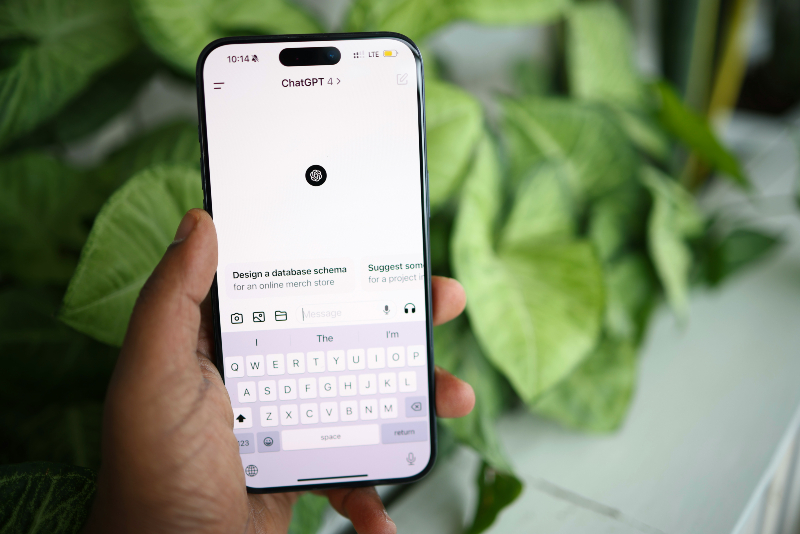
Here’s a number that caught my eye when reviewing the BIG Partnership website performance back in April. Visits that arrive from ChatGPT view 1.64 pages per session. In comparison, organic search sends us 1.20, direct is 1.10, and social sits at 1.00. So, AI referrals may be the newest, smallest, most-hyped source of traffic we have, but crucially it is also the most engaged one we currently track.
That single number captures the shift I want to talk about. AI isn’t just changing how many people reach your website, it’s also changing who they are and how they behave when they get there. And it’s quietly rewriting the rules for how brands get found in the first place.
Search left home
For 20 years, search had one home. You optimised for Google (yes, and the others too, but let’s be real, it was mainly Google), you competed for a spot in the ten blue links, and if you did it well, people clicked through to your site. That world is changing.
Search now happens across a whole ecosystem of platforms. Data from SparkToro and Datos, published in early 2026, puts traditional search engines at roughly 81% of US search behaviour, with commerce platforms taking 10%, social networks 5%, AI tools 3% and 1% across other platforms. The percentages will keep moving. The direction of travel is the point: people discover brands through many front doors now, and a lot of those doors don’t lead to a click on your website.
Even inside that shrinking 81% of traditional search, the click is under pressure. Google increasingly answers the question on the results page through AI Overviews, so the user gets what they came for and never visits a site at all. Ahrefs research from early 2026 found the top-ranking page’s click-through rate is as much as 58% lower where an AI Overview appears.
So here’s the honest summary. There are more places to be found than ever, and fewer of them reward you with a visit. Clicks are no longer the currency. Being chosen by algorithms, AI chatbots and ultimately consumers, is.
Fewer visits, better visits
This is where that 1.64 comes back into play. If AI referrals were low-quality noise, they’d be easy to ignore. They’re the opposite. And we’re not the only ones seeing it: Adobe, drawing on more than a trillion visits to US retail sites, found in March 2026 that AI-referred shoppers viewed 13% more pages per visit than other traffic and spent almost 50% longer on site. Better still, they converted at a rate 42% higher than non-AI traffic.
When someone arrives from the likes of ChatGPT or Claude, an AI has already done the filtering. It’s read the question, weighed up the options and decided your brand was worth naming. The person clicking through isn’t window-shopping. They’ve been handed a recommendation, and they turn up warmer, more informed and further down the purchase journey than a cold searcher poking at ten blue links.
Fewer visits that convert better isn’t a downgrade. For most of the clients we work with, it’s a better deal than the traffic it replaces. The question is how you earn those recommendations in the first place.
AI rewards trust, and trust is built through brand
Here’s the part that should change how you spend your marketing budget. When an AI system decides which sources to cite, amplify or summarise, it leans towards the signals of strong, consistent, well-established brands. It’s trying to answer four questions about you, whether you like it or not.
Who are you?
Can an AI recognise you as a distinct entity, and does it actually understand what you do and what you stand for? This is where a lot of sites fall down. If your own website can’t state plainly what you are, who you’re for and why you matter, in words real people use, you can’t expect a machine to work it out on your behalf.
Where are you?
What does your presence look like beyond your own website? This is the digital estate you can claim and control: your Google Business Profile, your LinkedIn and other social profiles, Glassdoor, Trustpilot, the relevant industry directories and listings. Every one of these is a place you can put a consistent, accurate version of who you are, and every one gives an AI another reference point that says you’re a real, established organisation. Claiming and maintaining them is some of the most straightforward trust-building work you can do.
Who trusts you?
Are credible, independent sources talking about you? Third-party mentions, coverage and reviews you didn’t write are the proof a machine reads as other people taking you seriously. You can invite them and make them easy to leave, but you can’t manufacture them, and that’s exactly why they carry weight.
Does it all connect?
Is your identity consistent enough that the machine can join the dots with confidence? A machine is constantly cross-referencing the picture you paint on your website against your profiles, your listings and what others say about you, looking for a consistent, verifiable story. Different company descriptions, an old address here, a name variation there, a positioning that’s moved on everywhere except the places you forgot to update, and the whole thing gets harder to trust.
None of that is new. What’s new is that these trust signals now feed directly into machine-readable visibility. Brand is no longer only about how people feel. It’s about whether an algorithm can verify you well enough to put your name in front of someone.
That reframes trust from a soft objective into the most powerful organic lever we can still control. We can’t control Google’s algorithm or ChatGPT’s training data. We can control how trustworthy, consistent and well-attributed our brand looks to the systems doing the choosing.
Five ways to start building it
1. Put your people front and centre.
Audiences trust people more than logos, and so, increasingly, do the machines. When your employees share their expertise and their working lives, it signals an authenticity no campaign budget can manufacture. Pick three to five genuine voices, build proper author profiles for them, and give them a content brief rather than a script.
2. Make room for your customers.
No brand voice is as convincing as a customer who had no reason to be nice. User-generated content gives AI systems and search engines the third-party proof that your own copy can’t replicate. Invite it and make it easy for your customers to get involved.
3. Treat reviews and case studies as infrastructure.
They live exactly where your audience looks before they commit, and AI systems actively surface this kind of independently-attributed content. This isn’t a nice-to-have on a quiet quarter. It’s the proof that you deliver what you promise.
4. Put a name to everything you publish.
Nameless content earns no authority. Google’s E-E-A-T guidance and the AI systems that echo it reward content attributed to identifiable experts with real credentials. Add author bylines to every article, write proper bio pages that set out each person’s focus and credentials, and use Person schema so the machines can connect the author to the work.
5. Keep earning coverage.
Being talked about isn’t vanity. It’s how the machines confirm you exist. Press coverage and brand mentions create the off-site footprint that tells search and AI systems you’re a real, recognised organisation. This is the point where PR and SEO stop being separate budgets and start being the same job.
The lever worth pulling
We’ve written before on this blog about trust as the thing that makes choosing easier for people. Our Strategy Director, Paul Hadfield, recently tackled the question “Are you making your brand easy to trust?”, and I previously discussed the ever-growing case for combining SEO and PR. All of that still holds and the direction of change is continuing.
The brands that win the next few years won’t be the ones chasing every new platform or waiting for an algorithm update to rescue them. They’ll be the ones that stop treating search, PR, content and brand as separate budgets with separate goals, and start running them as one job with one aim: being a source worth trusting.
The digital world has changed. Trust is how you stay found in it.
To speak to our digital team about how we can help you to solve your SEO challenges, get in touch at [email protected].