BIG Partnership appoints Head of Public Affairs

Former senior SNP aide Paul Robertson to strengthen public affairs practice.

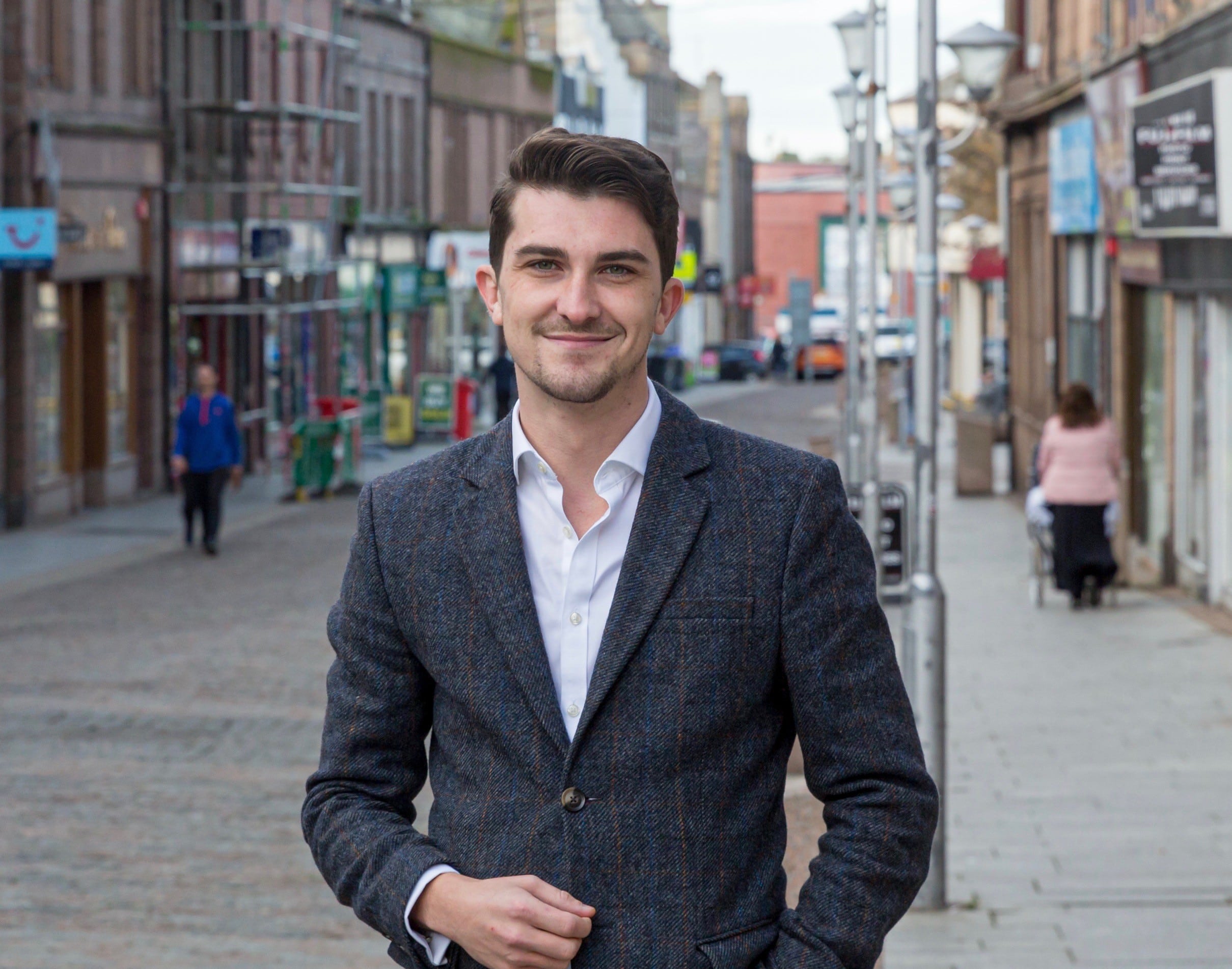
The Big Partnership have appointed Paul Robertson in a new position of Head of Public Affairs to strengthen the agency’s public affairs practice. Paul joins BIG from top-ten London consultancy Portland, where he spent four years advising major corporate clients on public affairs and strategic communications.

At BIG, Paul will work across the agency’s offices to strengthen its public affairs advice and support to clients, and to grow BIG’s public affairs offer to new clients.

Prior to working at Portland, Paul was the Scottish National Party’s Head of Research & Policy in Westminster and played a key role in building the party’s operations in London. He was responsible for developing policy and political strategy on reserved issues, and was a senior aide to successive SNP leaders in Westminster.

Commenting on the appointment, BIG’s Chief Executive Allan Barr said: “Paul’s appointment is a significant investment in the future of our business. He is an accomplished and highly respected public affairs practitioner who is well-placed to lead the development of a growing part of BIG’s business and our offer to clients.”

“As we emerge from the pandemic and attention turns to economic recovery, Paul’s extensive knowledge and insight into Scotland’s political and regulatory landscape will be an invaluable support for our clients looking to build connections and partnership with Government.”

Paul added: “BIG is an exciting agency that is trusted by clients with some of the most high-profile challenges in the media and policy landscape in Scotland today. I’m thrilled to be able to add my skills and experience to the impressive range of services and expertise that BIG offers to current and prospective clients.”

A lovely finish for BIG in Crown Paints pitch

Crown Paints, the painting and coatings brand, has picked full-service marketing agency BIG Partnership to look after its trade PR and social media brief after a three-way pitch.

Under the contract, BIG will help Crown Paints grow its brand presence with the important architect and design community, as well as supporting its trade brands for professional painters and decorators. The brief also covers an ambitious new retail strategy for a series of new and existing Crown Decorating Centres across the UK.  

Crown Paints has a 200-year heritage, having been founded in 1777 in the town of Darwen, where it is still headquartered today. It is part of international coatings specialist Hempel Group, owned by the Hempel Foundation, which supports cultural, humanitarian and scientific causes around the world.

BIG’s Manchester team will lead the Crown Paints account.

Rob McCann, BIG’s Head of Manchester, said: “Crown is a brilliant brand and one the whole team was really excited about working on. It’s a fascinating business with some really exciting ambitions, so we can’t wait to take some of our ideas and make them a reality.

“Our team worked incredibly hard to deliver a great pitch and it’s always nice to see that result in a win.”

Katie McLean, Crown Paints marketing director, said: “As well as a great pitch, the BIG team showed real enthusiasm for working with us and really understood our industry and what we’re trying to achieve.

“We loved that BIG had put so much effort into their research and interpretation of the brief, and clearly went above and beyond to provide a really impressive pitch with some great ideas.”

BIG hires new board director to head up Manchester office

BIG Partnership, the UK marketing and communications agency, has appointed Rob McCann as head of its Manchester office as it plans to ramp up investment in the North of England. 

Rob joins the 95-strong agency as a board director and will work closely with BIG’s existing board to drive forward the agency’s ambitious growth plans across the UK. 


Coming to BIG from his previous role as head of client services at Manchester agency BBI, and prior to that Yorkshire agency Jaywing, Rob brings more than a decade of agency experience across integrated marketing, digital and communications. His previous clients include Sky, BT Sports, Hoover, Halfords, DW Sports, ADT and Jewson.  

BIG’s CEO, Allan Barr, said: “Rob’s appointment represents a major signing for our agency. He is a well-known and highly respected figure within the North-West agency scene and brings a huge amount of experience in successfully leading integrated accounts for a multitude of household brands. 

“I’m excited by Rob’s vision for BIG in Manchester. He has a proven track record of creating major campaigns that have delivered impressive results for clients and we believe he is the right person to lead our operations in the North West. We’re backing him with a major investment to significantly ramp up our Manchester team and he’s already identified several key signings that we’ll be unveiling in the coming weeks.” 

Rob McCann said: “I’ve been keeping an eye on BIG’s Manchester office for a few years now. From a standing start, it’s grown to become one of the UK’s largest independent agencies and one of only a few who can truly boast a full-service offering to its clients. Once I learned of its plans to significantly ramp up its base in the city, I jumped at the chance to become a part of that journey.


“As the industry evolves, I believe we are seeing a trend in clients looking to benefit from the economies of scale and efficiencies that come with having a single agency partner to cover all their marketing and communications needs. Clients often don’t have the time to brief multiple agencies and deal with what can be competing interests. As a full-service agency, I believe BIG is ideally placed to capitalise on that shift.” 

BIG provides PR, marketing, digital, public affairs, design and events to more than 350 clients nationwide, from offices in Manchester, Glasgow, Aberdeen and Edinburgh. Clients include the likes of Apple, Red Bull, NatWest, Peel Ports, The Macallan and Aldi.   

Why media training matters for your communications strategy 

Few moments illustrate the importance of media training more vividly than Prince Andrew’s car crash 2019 BBC interview

Intended to clear his name, the sit-down with Newsnight instead became a case study in how unprepared messaging and poor delivery can irreparably damage a reputation. Every pause, every phrase, every misplaced attempt at reassurance became the headline.  

As his bombshell performance yet again makes headlines for all the wrong reasons, the lesson for anyone who engages with journalists couldn’t be clearer. Media appearances demand intensive preparation, discipline and a strong understanding of how journalists work. Some people are naturally very confident and capable in front of a camera in difficult situations. The truth is that most of us are not. 

The value of preparation 

That said, media training isn’t about turning people into slick spokespeople. It’s about helping them communicate clearly, concisely and confidently – particularly under pressure. The vast majority of journalists aren’t out to trip people up; they have a job to do, just like the rest of us. And their job is to find interviewees who provide clarity and insight that help audiences make sense of complex issues. 


The best interviewees understand this dynamic. They know what their key messages are, how to express them in human terms, and how to stay focused even when questions stray off-course.  

When a spokesperson hasn’t had this preparation, interviews can quickly unravel. What feels conversational in the moment can sound defensive or inconsistent when replayed. Training builds awareness of tone, pace, body language and message discipline – all essential to building trust with an audience. 

When it matters most 

Media engagement plays a pivotal role in a wide range of business scenarios – and they’re not necessarily crisis situations. Launching new products or services, distilling reports or analysis into usable information, and simply providing balance are all examples of when putting forward spokespeople can have positive impact. On the other hand, if a serious incident occurs, a human face will reassure stakeholders and demonstrate accountability when it matters most. 

A win-win for business 

Engaging with the media should be seen as an opportunity, not a risk. Well-executed interviews can strengthen a company’s reputation, boost brand awareness and establish its people as credible experts in their field. By offering clear, well-informed commentary, businesses help shape the narrative around their industry while showing leadership and openness. Over the long-term, sharing valuable insight builds a level of trust and authority which can’t be achieved through advertising alone. 

Making media work for you 

As Prince Andrew has shown, if you or your organisation becomes the centre of a story the media spotlight will find you, whether you want to be in it or not. The question is whether you’ll be ready when it does. Incorporating media training into your communications strategy isn’t a nice-to-do when the time is right; it’s an essential safeguard and can provide businesses with a strategic advantage over competitors – because if you aren’t out there explaining your sector or telling people about what you do, another business will take your place. 

In today’s fast-moving media landscape, preparing appropriately is the difference between being quoted, and being remembered for all the wrong reasons.

Why media training is a must-have for your communications strategy

We’ve all seen them – the cringeworthy interviews from politicians, chief execs or celebrities who are being torn apart by the big, bad journalists. We sit watching with our hands over our mouths, unable to take our eyes off the screen.

Some zingers that spring to mind include Emily Maitlis’s televised interview with Prince Andrew, or former PM Theresa May’s sit down with Andrew Neil on social care costs.

For us PRs, it’s hard to watch and not think: “Why on earth didn’t they get proper training before they were put in the hot seat?”

Media training is crucial for anyone who may have to interact with journalists, whether it’s for television, radio or print. What’s more, it’s not just important for the bad stories or the crisis situations, it is also essential when it comes to making the most of positive communications. The goal of media training is always to prepare you as well as possible for all forms of questioning, allowing you to communicate with your audience effectively and ensuring you get the right messages across to them.

Now, it can be nerve-wracking to be interviewed by a journalist, whatever the topic. It’s natural to worry they’ll throw you a curveball or that you’ll say the wrong thing.

With many journalists now working remotely and with face-to-face interviews currently on pause, it can be even more challenging to get a feel for how you’re doing. It is difficult to read someone’s body language on a video call and it can be tricky to answer questions if your Wi-Fi is acting up.

But, with the right training and a cool head, taking part in interviews remains one of the most effective ways to build profile, manage reputation and interact with your key audiences.

Like any other skill, good interview technique needs to be worked on. It’s like a muscle that needs to be exercised; the more you do it, the better you become. It’s not just about learning your answers word for word – let’s not forget this corker from Ed Milliband – but being able to adjust your messaging depending on the tone and approach of your interviewer. Your body language and facial expressions are important too, and not just when there’s a TV camera in the room. The more practice you get, the more confident you will feel.

In an age where the news agenda is moving 24/7 and a tweet can be tomorrow’s headline, taking time for some professional coaching is like having a form of guarantee – you’ll always do better if you’ve taken time to prepare.

We live in a super-connected world where news travels incredibly quickly. Media training will always be essential, and has never been more important than it is today.

We all know what a bad interview can do to a brand or business, so why risk it? BIG’s experienced media training team is led by ex-journalists and PR veterans who deal with the media on a daily basis. From breathing techniques that’ll help you focus, to the way you frame an answer to a difficult question, we’ll teach you everything you need to know to go into any interview feeling confident and ready for action.

Want to know more? Get in touch.

A BIG start over a small screen

As I pass the halfway mark of my three-month internship at BIG Partnership, I thought I’d share my thoughts on starting an internship from home.  

When I sat down at my desk on the morning of my first day at BIG Partnership, I faced a three-month internship with a team I had never met before, and I was doing it all from my laptop.

Since graduating in a year that many would call unprecedented, I had been fortunate to gain previous experience via an internship with another agency before starting at BIG. Albeit, an agency I had previously met in an office. My internship with BIG, however, has this far been completely virtual, where I work with colleagues I have never had a chance to meet in person.

I won’t lie, there are some perks to starting an internship from home. I was quite happy to miss out on the first-day outfit stress the night before and the challenge of where to sit in the office when I got there. (Just imagine accidentally sitting in the boss’s seat?!) These are not the type of problems you encounter when you begin an internship from your family home.

Instead, I worry if my brother’s Netflix use will overwhelm the Wi-Fi, or if my dogs, as cute as they might be, will bark when the doorbell rings, or if my dad will stomp into the middle of the room whilst I’m in a meeting. All three of which can already be ticked off the list.

As daunting as a virtual first day could be, this proved not to be one. Even with some IT-shaped bumps in the road, my first day, as well as the rest of my first week, was smooth sailing. I was met by smiley faces from friendly colleagues that are only a Teams call away and was quickly brought up to speed with the exciting projects and campaigns that were in the running with clients. Despite the distance, I couldn’t be more appreciative of how quickly and effortlessly the Edinburgh team has brought be into the fold.

Although I can’t easily give someone a quick (physical) nudge to ask a question, the team are incredibly approachable over email and Teams chats when asking for help. I feel I have equal opportunity as a virtual intern to attend client meetings, conduct media sell-ins, write press releases, work with influencers, as well as attending, which one can only describe as a very different, Company Christmas Party!

A recent highlight has been working on Simon Howie’s launch of the first ever haggis in space. We were very proud to have secured fantastic coverage of this launch across social media, national and regional coverage, with the Simon Howie Space Haggis even travelling to CNN in the US!

I feel very fortunate to joined the Edinburgh team at BIG during this time, and I’ve loved working on a superb range of clients. It is inspiring to see how successful they have been despite the challenges of the past year.

My experience as an intern may be vastly different to previous interns, but I’m certain that I am enjoying it just as much as those who interned in the office. I believe starting an internship at BIG is seamless, whether it is in person or over a computer screen, given the friendly nature of both the Edinburgh team and the whole company. Though, I must admit that getting to see wee Henry, Sarah Robertson’s gorgeous puppy, during calls is definitely a bonus of working from home!

Niamh Frizzell – BIG Intern

Why businesses should say ‘yes’ to marketing during the pandemic

As we sit here in the middle of another lockdown, struggling to distinguish each day from the next, I think it is safe to assume that 2021 hasn’t brought the exciting new beginnings we had all hoped for.

But for the first time this year, we go into the weekend with something new to celebrate – Valentine’s Day.

Love is in the air and we have to admit at BIG Partnership, we are all a bunch of hopeless romantics. So, to mark the occasion we are sharing our own story of how we supported longstanding client Macdonald Hotels & Resorts to encourage lovebirds to tie the knot in 2020.

From the banks of the River Thames to the Highlands of Scotland, Macdonald Hotels operates some of the country’s most picturesque and scenic wedding venues. Experts at making brides and grooms’ dreams come true, the team of experienced wedding co-ordinators typically plan hundreds of weddings a year.

But 2020 was not a typical year. If they managed to go ahead at all, it was clear that weddings were going to be anything but normal. It was a tough time for the industry and faced with uncertainty in the market, Macdonald Hotels & Resorts, threw its heart – and soul – into encouraging brides and grooms to walk down the aisle.

Working hand-in-hand with its in-house marketing team, our first step was to review the industry landscape and research how the pandemic had changed people’s attitudes to weddings.

We also analysed the demographics of existing enquiries. This detail was crucial and allowed us to focus our efforts by targeting specific media publications consumed by our target audience.

Central to our campaign was underlining Macdonald Hotel & Resorts’ trusted and reputable brand, highlighting the group’s robust safety measures, flexible booking policy, and ability to offer everything under one roof. But we also knew that, when it comes to booking a wedding, it is the individual venue which couples really fall in love with.

This led us to making the wedding venues themselves, and the people who work at them, a central focus of our communications. Wedding co-ordinators were put up for interview and we shone a light on real life lockdown case studies.

Our review of the booking data also enabled us to craft trend stories covering everything from the rise in ‘squeal’ and ‘shift’ weddings which allow couples to marry and celebrate with different groups at different times, to the revival of the hotel wedding venue as couples ditched recently-popular unconventional spaces, such as rustic bars and marquees, for something more traditional.

Engaging with our many national and local media contacts across both England and Scotland, we reached more than three million people in less than a month and, most importantly, there was a distinct increase in enquiries as a result.

Our activity had to be flexible, and it did feel at times like we were amending our campaign every time the Prime Minister appeared on TV. However, it was this ability to adapt quickly which made the campaign a success.

As the vaccine programme rolls out and we begin to see the light at the end of this long, dark tunnel, we are already getting prepared for the next big PR push. While that is certainly exciting, I for one am hopeful that planning a wedding, and a marketing campaign, in 2021 will be a little more straightforward than it was in 2020.

There may still be some uncertainty ahead, but if we have learned anything from the past year, it is the importance of communications. Marketing your offering and creating a compelling story which engages potential customers not only brings great opportunities to the business, but in this case it actually helped loved up couples make it down the aisle.

As we prepare for things to open up once again businesses should take this time to plan accordingly, refining their messages in line with the current landscape, researching the best channels and devising a strategy for engaging with audiences.

Interested in finding out more about our PR work and the other marketing services we offer? Have a look around our website.

Ashleigh Copeland – Account Director

Adapting to the news agenda when there’s only one thing people are talking about

Coronavirus. The pandemic. C19. Covid-19. Health crisis.  I can assume that for most people working in the communications and marketing industries, we have all been trying to find a different way to phrase the biggest global crisis of our generation. In a profession where repetition is a no-go and finding new ways to say the same thing is crucial, how have we managed to adapt when one story dominates the news agenda day in, day out?

Like many other sectors, we’ve had to change our focus – and fast. Hours of planning, writing, organising events, liaising with communities, getting geared up to launch new campaigns, storyboarding, designing marketing materials…we’d all spent a lot of time waiting to share this with the public and now it looks like our desktop is the only place where some of this content will land.

Was this a waste of time? We’ve obviously had to press the pause button on some of these exciting opportunities, but the time spent has enabled us to give trusted advice on what clients and brands should be communicating in an environment that nobody could have predicted.

Despite the frustration that, for the time being, we can’t do the things we’d originally planned for clients, remaining enthusiastic and creative has helped us shift our focus to concentrate on what we can do.

Agility is a word that has been used consistently in the media when explaining how sectors have changed in response to coronavirus, and that rings true for so many of our clients. We’ve been able to share their amazing efforts during the pandemic including that of spirit distillers who have changed their production lines to create hand sanitiser, construction teams who have donated PPE kit to the frontline, football clubs who have supported their fans and the community and schools adapting traditional proms to go virtual.

PRs too have harnessed agility, working quickly and proactively to ensure we continue to make positive impacts for clients who have meaningful stories to tell and helping them become the go-to spokespeople for important matters – both in print, online and via broadcast opportunities

.

Looking at the impact that this had on the wider media landscape, journalists and broadcasters have been faced with the biggest story of recent times, but ironically one that may be catastrophic for the industry.

We’re urged to buy a newspaper as it’s more important than ever (as long as we buy one during our allocated shopping time) or encouraged to switch to a digital subscription. It’s a worrying time for the media and that’s why we have to ensure the stories we share will resonate with their readership.

Absorbing news from across a multitude of channels and titles, as always, helps us to understand what journalists are looking for. When watching the daily briefings from both Scottish and UK governments, we are forecasting what’s going to be on the 6pm news that same evening and making tomorrow’s newspapers, so producing relevant content quickly has never been so important.

Adapting to the news agenda when there has been only one story making the front pages daily has, of course, had its challenges.  It’s been important to bear in mind exactly why we have had to change. It’s a scary and uncertain time, so the tone and messaging used within communications needs to be sensitive and positive if we want our clients’ reputations to stay strong.

However, despite the harrowing headlines, we have seen communities come together and start initiatives that will have a lasting impact when the coronavirus cloud eventually clears. Both internal and external communications have been paramount for all businesses throughout the pandemic, highlighting why this investment can make such a fundamental difference.

Hannah Fisher – Account Manager

My new pair of Air Jordan 1s: A short tale of attribution

Like most of the world, I’ve been working from home since the COVID-19 pandemic took hold of the planet back in March.

Again, like most of the world, this has meant that I’ve spent some serious downtime shopping online and considering various quarantine spending sprees while the doors of the physical high street remain firmly closed.

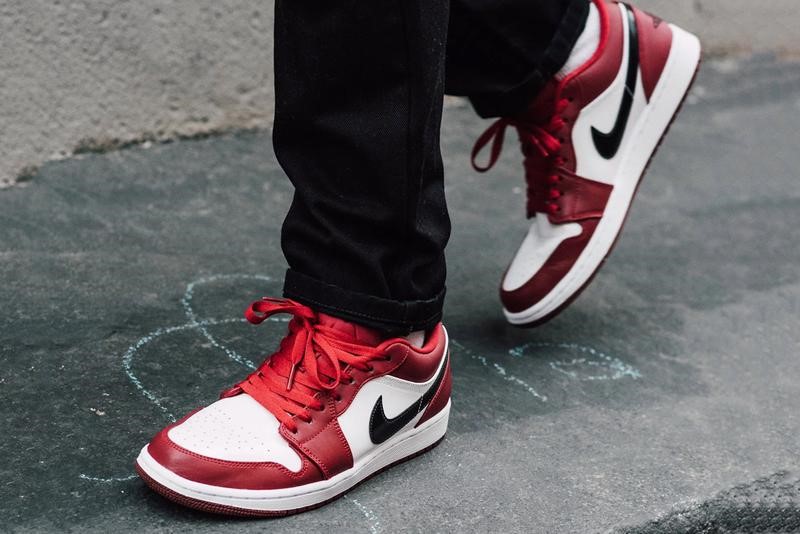
My latest purchase? A sweet pair of red, white and black Air Jordan 1s.

Like these:

Red and white Air Jordan 1s

As marketers, we know that consumers will rarely (or never!) visit a website just once before purchasing a product. I was no different. This blog offers a quick anecdote that will sprint through my simplified customer journey, and its various touchpoints over a couple of weeks of consideration that have resulted in me sitting down to write this with a fresh pair of sneaks on my feet.

Step 1: Netflix

Not many marketing blogs would start an attribution journey with Netflix; however, without the recent release of The Last Dance, a fantastic basketball documentary revolving around Michael Jordan and the 1997/98 Chicago Bulls season* I’d still be sitting in a battered old pair of Vans right now…

*If you haven’t seen it, it’s a must-watch!

I’m a big basketball fan, and despite having lived all my days within a tight radius of my home city of Glasgow, from a young age I had chosen to pledge my allegiance to the Chicago Bulls.

When MJ donned his original pair of red, white and black, iconic Air Jordan 1s for what could have been his last game at Madison Square Gardens, I decided that it was time for my very own pair.

As digital marketers, we love to measure things at as granular a level as we can. We need to know the value that each channel we invest in contributes to the big picture. We like to put things in boxes and report on the return on investment from within those boxes.

However, including Netflix as an important first step here reminds us that, for a long time (and in many cases, still), marketing didn’t always have a conversion attached to it. Although we can measure the halo effect that such exposure has on brand search, etc., sometimes product placement, billboards and TV ads are all about starting a story that is ultimately finished elsewhere.

Step 2: Paid search

What do you do when a product catches your eye? You Google it of course!

As Head of Paid Search at BIG, I’ll always have a natural (biased) interest in the role this channel plays in any purchase journey.

As a bottom-of-the-funnel digital channel, PPC can feel the pressure to drive an instant return. This causes all sorts of performance questioning when ads are switched live, but the tills aren’t subsequently lighting up immediately.

Yes, PPC ads are triggered by user intent, but when I plugged ‘air jordan 1s’ into Google, what was the likelihood that I’d go ahead and click on the first ad I saw and make that purchase? Slim.

Consumers like to research. We like to get the best deal out there. And as digital marketers we need to remember this when it comes to the approach that we take to PPC keyword targeting and measurement strategies. Paid search isn’t always the closer.

Step 3: WhatsApp…?

Curve ball…

No, I wasn’t targeted directly by any form of ad on WhatsApp. But it definitely merits a shout out.

When making purchase decisions online, we’ll bounce products off friends and family to get the validation that what we are about to buy is a sound investment. We want peer approval. Affirmation. We also like to return the favour and recommend products that we think our WhatsApp contacts might like.

I know I certainly did this on my recent online shopping escapade when considering various retailer websites, Jordan colourways, alternative styles etc.

So how do we factor this value into the customer journey from an attribution point of view? Well, we can’t really.

Unless we’re sharing messy UTM tracked links in our WhatsApp group chats when our friends send us links, or vice versa, this will be picked up as direct traffic in Google Analytics.

This ‘dark’ traffic can be important to understand when establishing the different routes that consumers are taking to discover and engage with your product and brand. Although there are no perfect workarounds for reporting on this, creating custom segments in Google Analytics to pinpoint this traffic can be a valuable exercise. Specifically, isolating direct traffic to deeper website content (e.g. a product page for a pair of Air Jordan 1s) that a user would be unlikely to type into their browser manually is a good starting point.

Step 4: Remarketing

Remarketing and online retail just go together. It’s an age-old, digital love story.

All paid media platforms now offer brands the opportunity to retarget prospective buyers when they have engaged with your website. You can get creative with audience segments ranging from all previous visitors, views of product pages, shopping cart abandoners – the list goes on.

Throughout my quest to buy those Jordan 1s, I’ve been hit with many tempting ads across Facebook and Instagram and various Google Display Network publisher websites. Remarketing ads remind me that this is a product that I want. They keep the sneaks firmly on my radar while I wait for the right time, or mindset, to make the purchase.

Importantly, like Paid Search, we need to consider the value of remarketing beyond a direct purchase. Paid media platforms offer a solution for this via ‘view’ attribution metrics to let you know when your customers eyeballs met your ad on their way to sale – even if they didn’t click on it.

Step 5: Auto-fill URL (Direct)

Fine, I’ll buy ‘em (can always send them back, eh?).

So, after a couple of weeks of checking back on the retailer’s website that my size was still in stock and holding out for any discounts popping up in remarketing ads, I made the purchase.

At this point I knew where I was going, so simply started typing the URL into my browser before auto-complete took care of the rest and led me back to where I had left off. Perfect.

Traffic from auto-completed URLs will appear under Direct in Google Analytics’ acquisition reporting. And Direct traffic is often blamed for swallowing up all sorts of valuable data that has a deeper backstory than the surface level would suggest.

Thankfully, Google Analytics’ defaults to a last non-direct click attribution model and offers insight into the customer journey to sale via multi-channel funnel reporting. This means that those valuable twists and turns in my purchase journey, and numerous clicks to the retailer website, will not be forgotten when numbers are being crunched and channel value is being calculated.

So, there we have it, another fuzzy user journey to leave digital marketers scratching their heads…

My key takeaways for digital marketers when reflecting on my latest quarantine purchase:

Consider all touchpoints – not just the ones you know about…

Netflix and WhatsApp are just a couple of rogue examples in my purchase journey.

Sometimes you can’t measure everything the way you’d like to, and sometimes that’s ok.

Think beyond first-party, Google Analytics data. Step outside the box. Is there a reason, beyond your own marketing efforts, why one of your products is getting a lot of attention lately?

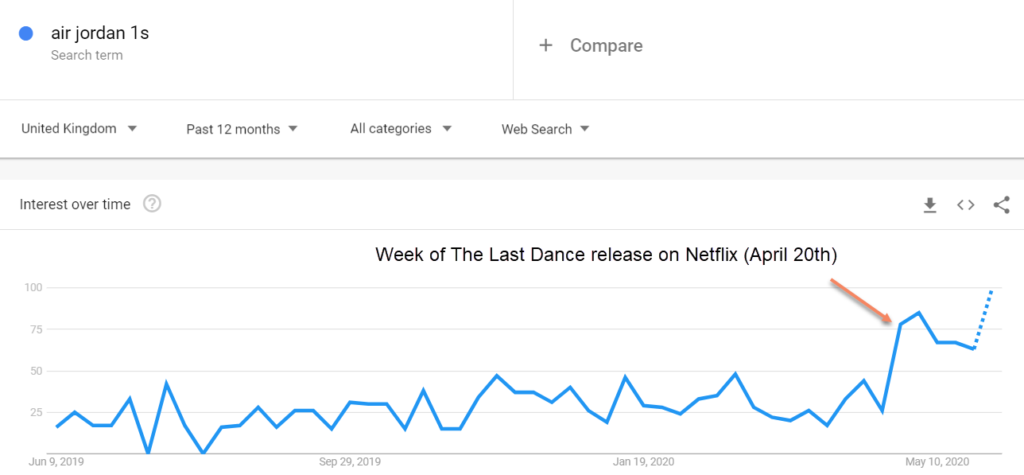
A quick look at Google Trends shows that I wasn’t the only one influenced by The Last Dance.

Simply being able to correlate spikes in website traffic and sales with wider behavioural trends can go a long way in joining the dots to contribute to wider marketing decisions. Or can even just help to explain bumps in the numbers a little better.

Think beyond what digital channels are supposed to be ‘good’ at…

Paid search can be an opener as much as it can be the channel that seals the deal in your customer sale. A display ad from an awareness campaign can convert traffic with one click. Digital channels won’t always perform the way you expect them to.

Consider using a holistic approach to your measurement strategy.

Report on ‘view’ sales within your paid media ad platforms and use Google Analytics multi-channel reporting to gain deeper insight into how paid media investment has played a role in that final click that led your customer to click ‘confirm’ on your purchase page.

Talk to our BIG digital team to understand more about the various paths that your customers are taking to your website on their way to sale.

Craig Edwardson – Head of Paid Search

How to make content that sells

In this blog we’ll look at the best ways to produce content that really makes an impact for your brand or business.

Minding Your Own Business

When it comes to creating content, there are millions of different types of things you could create, including infographics, videos, podcasts, collaborations, installations and so on. But if this content is not authentic or fresh (a little surprise and delight) to your brand or company then it’s really going to struggle to stand out in a world that already has an abundance of content.

What I mean when I say “mind your own business” is that you should not look to copy what your competitors are doing – look to the past or to the future but not now. Concentrate on one thing that you do better than anyone else and show the world. Matt Calderwood is my example here – this is a guy that says, “not everything unbalanced is unbeautiful.” He has become an artist – with his work exhibited in galleries around the world – and to put it simply, all he does is balance things. But he is the best in the world at doing it.

Matt Calderwood, Found Objects, www.mattcalderwood.com

Flow

After a certain time spent creating content you will get into a flow. You will be relaxed in the knowledge that what you are going to produce will be of a standard that will mean people will happily pay for your stuff. However, this can be a trap because if you’re not challenging what you’re producing then you can’t fail. And if you can’t fail, then you can’t smash it out the park. It becomes too easy to just stay in our comfort zone. The drive to create something new should never be relaxed.

Conversion

Ok, so you have read all about how content marketing can improve your conversion with lead magnets and the like – but how do you go about creating it? Well, this is how I would do approach it….

First off, I would not look at it as content, but as a product. This may be because I am a product designer in my core but it’s a process that works for me. So, if every bit of content we create must feel like a product – what does that mean? Well, in creating a visual product the only thing you need to consider is, what are people going to feel when they view it?

“Art is how we decorate space and music is how we decorate time.”

To simplify things, follow this rule – whatever you are producing, it should always generate awareness, consideration or conversion. Whether it is a video, book, podcast, or interactive piece, it needs to result in one of these three outcomes:

1.      Awareness.

Get people to know who you are. Find out where your customers are and the best way to show them your product.

2.      Consideration.

Get people to buy into who you are and what you stand for – people need to believe in what you’re doing. For example, if you’re selling a cool t-shirt you need to surround your brand in the coolest music, locations, attitude, etc.

3.      Conversion.

They like or love your brand and they buy your stuff.

Making Content

Over my years of pitching products (content) to clients, big and small, there have always been buzzwords that I have used; viral, disruptive, brave, fresh and so on. Now, these words work, but the one I think that works the best (and you can use this in your next pitch) is unexpected. Your clients will get it and there are no negative connotations. We are trying to sell but we also must entertain, and your customers love to be surprised.

Here are some things your product (content) also needs to give it a fighting chance:

  • Stories sell. Don’t underestimate them, even bad ones are better than none.
  • Start strong. People are lazy and have terrible attention spans so, for example, if it’s a video then make your first 2 secs count. Same with blog headlines.
  • Make it interesting – just do that.
  • Optimise that product (content) for search – MAKE IT VISIBLE. An old rule from the world of television says spend 10% of the budget on creating and 90% on make it visible (or marketing). In the online world, I would say this might translate to 25%/75%.

Risk

Sadly, there is no rule book on what works and what doesn’t. Try to keep in mind that the extraordinary has become ordinary. If it doesn’t feel UNEXPECTED then there’s a good chance that it’s not going to work.

P.S. – Even if it is UNEXPECTED it might not work either! Whoops, fun times!? Embrace the adventure. The truth is the more you try the better you will get, and your audience will grow.

We’re ready to help you find the UNEXPECTED.

The BIG Creative Team