Regional news media has changed beyond all recognition, and here’s what it means for you

Our consultants Ben Palmer and Stewart Argo, both former journalists, reflect on the latest grim news from the UK media sector. 

Since the 2008 financial crash, the regional news media sector has shrunk to a quarter of its size in revenue terms (or to look at it another way – adjusted for inflation – it’s an astonishing SEVEN times smaller). 

The figures are contained in new research from industry bible Press Gazette, which has revealed the colossal extent of regional news media revenue decline in the UK since 2007. 

As part of its research, Press Gazette looked at three of the main local news publishers: Reach, National World and Newsquest.  

For a detailed breakdown of the revenue and staff figures, and associated caveats, it’s best to read the actual article. What we have done here is sum up the key points and explained what we think this means for businesses and other organisations that look to work with the media (or are forced to in some cases!) 

In 2022, the three companies Press Gazette focused on had regional media revenue of around £590m and employed up to around 3,000 journalists. 

Compare that to 2007, when the number of journalists employed totalled around 9,000 in 2007 and their collective revenue was £2.4bn 

That leads to three questions:  

  • Why is this the case? 
  • Should anyone still care about regional media?  
  • And what does it mean practically when dealing with local press? 

The value of local media  

On the first question, Press Gazette observes that there is strong correlation between the decline of the UK regional press and the rise of US tech giants. 

It also notes that in 2007 news media advertising – both magazines and newspapers – was worth £7bn in the UK, or 39% of the £17bn total UK ad spend (about £11bn in today’s money). 

Compare that with 2022, when all national, regional and magazine titles combined made around £2bn in advertising (print and online). That’s from a total £35bn UK ad spend.  

They’ve gone from taking 39% to a 6% slice of the pie. 

By contrast, last year saw around £15bn of UK ad spend spent with Alphabet, which owns Google and YouTube, and Meta, which owns Facebook and Instagram. 

You might be wondering, what does this mean for you if you’re looking for coverage in your local paper (or website!)?  

If we go back to the second of our three earlier questions, the answer is: yes, regional media still matters a great deal. Even though the sector is clearly in decline in many ways, local outlets are still widely read. Whereas historically, readers may have nipped to the shop for their paper, these titles are still very popular on other mediums such as X and Facebook.  

And it’s not just about numbers. Regional media play a very important part in influencing the political or community agenda in many places. They can be effective campaigners on local issues. They can shine a light of matters of real public interest. They can give a voice to people who would otherwise be unheard. 

Local journalists facing time constraints 

So, what are the practical implications of all this? 

For local and regional journalists, covering the issues that matter most to their readers is the obvious priority. That means a day job consisting of scheduled events, maybe some court reporting, emergency services incidents, and human interest tales. 

But even the likes of council meetings, once a rich source of copy, do not receive the same attention and scrutiny that they should. And long-form, investigative journalism is now largely confined to the major broadsheets. 

The main reason for this is obvious: fewer reporters producing more content. 

Time is an increasingly precious commodity for reporters. In the world of churn and clicks, ensuring that they are making the most of their resources is vital. In short, don’t waste a journalist’s time with a story that isn’t relevant.  

As an editor recently said to us: I don’t want to know what’s important; I want to know what’s interesting. 

What is a journalist looking for? 

If you’re pitching a story to a journalist, think of how it would look on the front page of a local paper. Is that something that a friend or family member of yours would stop to read when passing the newsagent? If it is, then that’s a good first step.  

Make a story sing. Provide good quality images and copy that can quickly be lifted into a journalist’s own version of the story to save them time redrafting. Add some colour to quotes that can be used for headlines. Make their job and life easier. 

This all matters if you’re on the receiving end of a query too. Of course it’s important to ensure that your issues or crisis comms strategy is robust, but you also want to consider the needs of the press too.  

In such situations, speed is the name of the game and being prompt in communication can carry a lot of weight. The time-pressed journalist that you helped when they’re filing copy against a tight deadline will likely remember that the next time you’re pitching a decent story. 

If you’d like to know more about how the changing face of the media sector affects your business or organisation, get in contact with us for a chat. 
Supporting Scotland to #GetToZero with Waverley Care

There is an old cliché that if you love what you do, you will never work a day in your life.

Believe it or not, there are people out there who love politics and public policy. I am one of them, because I have always seen politics as a way to make the world a better place. I’m fortunate that leading BIG’s public affairs and government engagement advice to our clients gives me the opportunity to do something that I genuinely love every day of the week.

I am also fortunate to work for a company that supports its employees to follow their passions and make an impact. As well as charity fundraisers and sponsorship, every BIG employee is given a day off a year to spend their time volunteering for a charity of their choosing.

This year, I chose to volunteer with a cause that is particularly close to my heart: Waverley Care’s #GetToZero campaign.

Founded at the height of the HIV/AIDS crisis in 1989, Waverley Care has been leading the campaign to end new transmissions of HIV in Scotland by 2030.

How is that possible?

Forty years after the first cases of HIV were diagnosed, what it means to live with HIV has changed.
There have been truly remarkable advances in medical care which means that HIV is no longer a death sentence. In fact, someone living with HIV can lead a long, happy, healthy life. I should know – I am HIV positive.

My medication doesn’t just keep me healthy, it helps me protect others. Today, people living with HIV who are undetectable cannot pass the virus on to others. We call this ‘undetectable equals untransmittable’. In Scotland, 95% of people in Scotland who are living with HIV and on successful treatment have are undetectable.

These powerful advances in medical treatment also help protect those who are at risk of HIV. Medication which helps prevent transmission – called PrEP – is now widely available on the NHS in Scotland to those at risk of infection.

And HIV testing – so people can know their status – is more accessible than ever before.

We now have all the tools in the box that we need to end new HIV transmissions in Scotland. Working with the Scottish Government, Waverley Care is leading the charge on a new strategy to make Scotland one of the first countries in the world to achieve zero new HIV transmissions.

But there is much to do to make this a reality. Misinformation and stigma are now the biggest challenges.

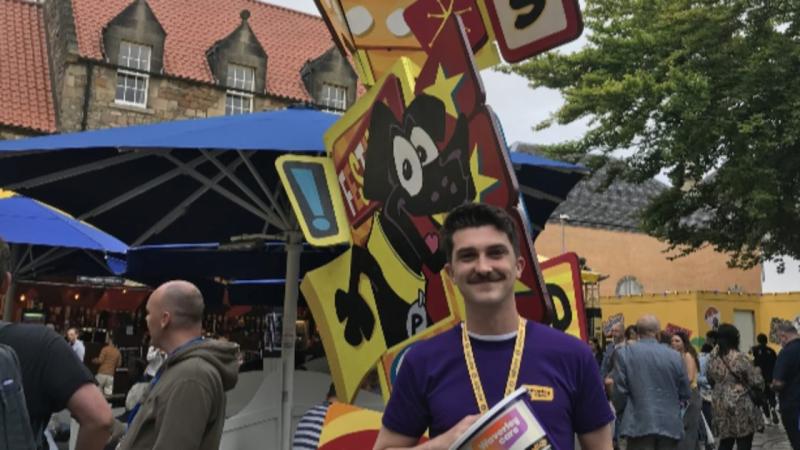
On a sunny day in August, I was proud to play my small part. Since 1992, Waverley Care has had a partnership with The Pleasance theatre, allowing the charity to raise money in the venue during the Edinburgh Fringe Festival. Since the partnership began, over £600,000 has been raised to support people living with HIV in Scotland. But perhaps the biggest impact of the partnership is the opportunity that it provides to have stigma-busting conversations with people from all over the world in one of the Fringe’s busiest venues.

Of course, your activism doesn’t end when you give back your card machine and your bucket, now overflowing with spare change, at the end of a volunteering shift. It is the conversations you have every day – at home, in the pub, in the workplace – that all add up to the positive change in how we view HIV, not just as individuals but as society.

You can learn more about Waverley Care’s #GetToZero campaign here: https://www.waverleycare.org/policy-research/gettozero/

How to unleash your Instagram Grid, Stories and Reels – Social Media Day ‘23

It’s Social Media Day, and to mark this occasion BIG Partnership‘s Head of Social, Kevin Mitchell, is going to break down some of the current mysteries behind Instagram’s algorithm; sharing its real power and how you can approach the Grid, Stories, and Reels for your business. 

In recent years, Instagram has become one of the most popular social media platforms, capturing the attention of users and businesses alike. With its user-friendly interface and visually appealing content, Instagram has a wide range of features that allow users to share their stories and experiences. 

But these Instagram features are not equal, they all serve a very different purpose. Whilst some gravitate to newer features like Reels, convinced new equals value, others stick with the Grid, convinced Instagram’s original feature set is the only feature that matters. 

I’m here to tell you, they’re all wrong. But I’m also here to tell all …

That’s why this Social Media Day, I’m going to tell you the real power of Instagram and how you can unleash your Instagram activity to power both your brand and demand.

How to approach Instagram’s Grid, Stories and Reels


Three of the most prominent features on Instagram are Grid posts, Reels, and Stories. Each feature has its own distinct purpose and style, offering different ways to share content and engage with your Instagram audience and followers. Let’s take a closer look at the platform differences between these features and how you should be using them to get real results.

Instagram Grid Posts

The Grid is the classic Instagram feed, where you can post photos and videos to share with followers. Grid posts are the backbone of Instagram, allowing users to curate their own visual galleries. Each post takes up a square in the grid, creating a visually pleasing and organised profile. Grid posts are great for sharing high-quality, carefully curated content that represents who you are or what you do.


The real power of the Instagram Grid: It’s all about sharing compelling content and stories with your followers. It’s about growing brand interest and sentiment, not reaching new audiences for rapid follower growth. 

Instagram Stories

Instagram Stories are temporary, shareable posts that disappear after 24 hours. Stories bring a more spontaneous, behind-the-scenes, in-the-moment aspect to Instagram and your brand. You can share photos, videos, and live broadcasts, and add (custom) stickers, text, hashtags, and interactive elements such as polls, quizzes, and question boxes. 

Additionally, Instagram Stories can be saved to Highlights, creating customisable sections on a user’s profile where they can categorise and feature their best and most important Stories for a longer period. 

The real power of Instagram Stories: Stories are temporary, making them perfect for sharing casual, less polished content, adding a layer of authenticity to your Instagram activity, with your followers. 

Instagram Reels

Introduced in 2020 as a direct response to the popularity of TikTok, Reels allows users to create and share short, looping videos. Reels is a platform within Instagram that offers various creative features, including video editing tools, audio tracks, effects, and AR filters.

Unlike Grid posts, Reels do not appear on users’ profiles. They are primarily discovered through the Explore page or the Reels tab, where users can browse through a curated selection of trending and popular content.  

The real power of Instagram Reels: Reels offer the opportunity to reach a wider audience way beyond your existing following. This makes Instagram Reels a valuable tool for enhancing your visibility and reach on Instagram, especially when you use trending topics and sounds. Typically, businesses would use paid ads to achieve this type of reach (and paid should feature as part of your strategy, we can talk about that another time), but it’s sitting right here, waiting for you to use it for FREE! 

Conclusion 

In conclusion, while Instagram’s Grid posts, Reels, and Stories all belong to the same platform, each offers a unique way to reach and engage with your followers and new potential. 

Grid posts allow for curated and permanent content, Stories bring an element of spontaneity and interactivity, and Reels provide a stage to reach a whole new audience across Instagram. 

Utilising these different features can help you diversify your message and content, interact with your audience in multiple ways, and ultimately amplify your presence on Instagram like never before! 

Why summer recess is the ideal time to engage politicians.

Ahead of the Scottish Parliament’s summer recess from 1st July – 3rd September, Jennifer Scott, Public Affairs Account Manager in BIG’s Edinburgh office, lists her top pointers on how to make the summer a festival of engagement. 

This June has been the hottest on record, and that has been enough to put us all in the summer spirit. You could be forgiven for thinking that politicians are no different, and that they can’t wait until Parliament goes into recess for the summer, so they can join the rest of us in putting our feet up, cracking out the BBQ or venturing off to take in the sounds of one of the country’s many summer music festivals. 

With both the Scottish and UK Parliaments entering recess in the next few weeks, there is undoubtedly an opportunity for our elected members to catch their breath and take a well-earned break. 

But if you think you’ve missed the boat on engaging politicians on the issues that matter to you – think again! 

Just the other day, I spoke with a contact who suggested that the months ahead will be quieter in the political landscape, and that businesses should down tools on the public affairs front until parliamentary business resumes at the beginning of September.  

But this overlooks the fact that summer recess is one of the main opportunities that our elected representatives get to spend an extended amount of time in their local areas – and this is all the more important ahead of a General Election next year. 

Don’t take my word for it – I spoke to one MSP who said: 

“As an MSP, I am keen to engage with as many community organisations and businesses during recess. I’m keen to engage with work around the main issues in the area – poverty, business growth, and tourism.  

“My advice would be to be specific about any reason for a visit and any briefing on why I should visit, as this allows for preparation.” 

Another MSP told me:  

“For me, summer represents an opportunity to get out to every corner of my area to speak to people and hear about their concerns. 

“With two months away from Parliament, recess is also a perfect time for me to catch up with as many fantastic businesses, charities and other voluntary organisations as I can.” 

So, as the Scottish Parliament and Westminster prepare for their summer breaks, here are five ways that businesses can turn the summer into their own festival of engagement: 

  1. Invite your local MSP or MP to visit your business 

Politicians are more likely to be in their constituency at this time and will want to maximise opportunities to get out and about in their local area, including visiting local businesses. When Parliament is sitting, time is tight, and it can often be difficult to get a good amount of time in the diary with an MP or MSP. But summer recess is an ideal time to bring your MP or MSP to you, familiarise them with your business, and discuss the issues that matter to you.  

  1. Get creative to help MSPs and MPs understand the impact of your business 

When it comes to visits, the more creative and engaging you can be will better help MSPs and MPs understand the impact of your business. For example, if you are a hospitality business, why not invite your local MSP to do a shift in your venue? Or if you’re a housing association, why not invite your local MSP to meet local residents or tour a new development? Whatever it is you choose to do, the key is to help MSPs and MPs understand your impact by showing them your business in action – bonus points if you can make it a good photo opp! 

  1. Get a head-start on planning your Party Conference engagement 

The world of politics and public affairs can often feel relentless, and many of us breathe a sigh of relief at the break the summer recess gives us. But the breathing space of summer is a great opportunity to get ahead of planning for later in the year, particularly for Party Conferences. Most of this year’s Conferences take place in October and will be a key opportunity to influence parties ahead of the General Election. Whether you are hosting a fringe event, or setting up 1-2-1s, planning your Party Conference engagement is a lot of work and the summer break offers you an opportunity to get a head-start. 

  1. Time for cross-party working 

The summer period makes it easier to get cross-party elected representatives together to discuss big issues that will affect all their constituents. At BIG, we advise a number of public bodies who find this kind of cross-party engagement and briefings both efficient and effective. You’ll need a clear idea of what you’d like to discuss and why, and it would be wise to do some research into which MSPs and MPs would have a particular interest in the topic you’re looking to discuss.  

  1. Use this time to demonstrate how you are delivering for their constituents 

Surgeries will be held by MSPs and MPs, likely at every town and village on their local patch, and will be used to discuss pressing issues in the area like housing availability, public transport, business growth and many other issues which play on the minds of voters. For example, last year, Labour MSP Paul O’Kane held a street surgery to meet and talk to the people he represents and many other MSPs do something similar. If you are a business which is ‘consumer-facing’, and particularly if you are involved in delivering services around those common issues of interest to constituents – from housing to public transport – then summer is a good opportunity to be actively engaging MSPs on the issues of concern to their constituents, and demonstrate how you are delivering on their priorities.   

A year in PR

Bronte Geldart, Junior Account Executive at our Manchester office reflects on her first year in PR with BIG Partnership.

When I graduated from university in 2022, I would never have thought I would be working with some of the world’s biggest brands 10 months later.

My first year in PR has been an exciting one to say the least… it’s been unpredictable, exciting and hectic.

For me, the transition from university into the industry was a daunting prospect but one that I knew I needed to embrace as soon as possible to avoid losing ammunition.

After weeks of searching for the right job, I was absolutely over the moon when I was contacted to attend BIG Partnership’s Manchester office, to take part in a second-round interview for a position in their PR team.

It looked like the perfect blend of a professional, fun and vibrant company to be a part of, and the team made me feel included and comfortable from the very first video interview!

Whilst juggling interview prep with writing my final third year dissertation, I knew that I wanted to begin my career whilst my brain was still working and hadn’t turned to mush over the summer. Looking back, this was vital to beginning my career in the best way possible. I believe that if I had waited for the summer to pass before throwing myself into the world of PR, I would’ve lost motivation and missed out on a brilliant opportunity.

After succeeding in getting the role as Junior Account Executive at BIG, I was beyond excited. We planned for my first day to be exactly three days after I was due to hand in my dissertation, meaning I didn’t have much time to worry about the big change from student life.

Moving from a room full of inexperienced 20-year-olds, to work alongside people who have been key to the Manchester PR industry for 15 years was overwhelming to say the least, but in the best way. Observing the way that senior members of my team worked, communicated and managed projects and clients was inspiring and gave me a desire to do well early in the job.

Working at an agency means that you get to work on such a great mix of clients. Some key highlights of the year include getting to work with Freddie Flintoff, Peter Andre and Calum Best (!), getting stuck into a rail construction client and helping to promote its different initiatives, as well as more generally contributing towards delivering more than 300 pieces of coverage for our clients every month.

Some of my favourite campaigns I’ve gotten to work on so far include:

  • Pride Ride: In July 2022 we worked with Booking.com to deliver a campaign to promote Manchester Pride, which involved a carpool karaoke tour of the city with Freddie Flintoff and Ru Paul Drag Queen Tayce, ending with a surprise event in Manchester city centre.
  • Half and Half House: In January 2023, we created the first ever Half Red, Half Blue house on First Street for Booking.com, to celebrate the Manchester Derby, and kicked up a storm with the national and regional press!
  • Language of Love: In February 2023, I was able to attend a shoot with Calum Best for client, On the Beach, where we had Calum read a series of the UK’s favourite chat up lines in different languages, promoting holiday romances.

These campaigns allowed me to gain experience in the different aspects of PR and introduced me to many important and diverse professionals.

Throughout the year, I have also been given the opportunity to work on new business ideas and in November I presented my first pitch! In December, when I had been working at BIG for 6 months, the hard all paid off and I was promoted to Account Executive. I celebrated at my first work’s Christmas party!

I can honestly say that I am a completely different person to who I was when I first met the team in May 2022. I’ll forever be grateful to them for their help and can’t wait to see what the future holds for us all as a team.

Making the move from journalism to PR

Ben Archibald, account manager in our Glasgow team, discusses how he moved from the world of journalism to PR.

After 12 years of “chipping away at the coalface of truth” as a journalist, I realised it was time for a change, and decided to follow the well-trodden path from journalism to PR. Over 18 months on I’m really happy with the decision I made to move into the industry and join BIG Partnership as an Account Manager back in August 2021.

As I approach my two-year anniversary of working in my new role, it got me thinking about some of the differences and similarities I’ve found between life in journalism and PR, and what I’ve learned since taking up the role.

I’m also using it as an excuse to finally post something on LinkedIn, which I have neglected – not making a single post on my own page since joining in 2010. [A lot of news journalists have historically seen Twitter as being a cooler/more relevant place to post than LinkedIn– although Elon Musk’s takeover of Twitter has negatively impacted its popularity – but I can definitely see the benefits of it from the other side.]

What have I learned?  

There are a lot of transferrable skills – In journalism you are writing every day and it’s the same in PR. Writing tight, relevant copy is equally as important in PR, if not more so, especially as you no longer have the safety net of a sub-editor to rectify any blunders. Also, a good news story is a good story, regardless of whether it is written by a journalist as an article or by a PR as a press release.

Good relationships are equally as important in PR – You spend a lot of time as a journalist building up relationships with contacts and PRs, whereas in PR you’re instead focused on improving relationships with clients, potential new clients, and journalists. The more contacts you have as a journalist, the more stories you have, and in PR the better your relationship with journalists, the more you can pitch and place good content, therefore providing the best possible service to your clients, so again there are definite similarities between the two industries.

You still get the same coverage buzz in PR – Some journalists might think they’ll miss the buzz of getting a byline splash or spread if they eventually leave the world of journalism behind. My journalist pals would likely quip that I never got much coverage as a reporter to begin with, so this was never likely to be an issue for me, but I genuinely get a similar buzz, if not more, in PR, from getting good coverage for a client. It’s often a longer process in PR, with a lot of work in the background before you finally get to the stage of issuing any release, so it’s always rewarding when something you’ve put a lot of work into goes well.

It’s great to get a chance to learn new skills – After being a journalist for so long, some aspects of the job had become second nature, so it has been good to push myself outside my comfort zone. Getting the chance to write releases, craft reactive statements, organise events and interviews, support stakeholder engagement and many other things has been nice and there’s great variety to working in the agency environment.

I will keep my first blogging effort relatively short and sweet. It has taken roughly 4500 days since joining LinkedIn to make my very first post on my LinkedIn page. If I keep up this success rate, you can all look forward to my next blog in early 2036!

The Changing Landscape of PR -The Insights driving the industry forward.

Jacob Metcalf, Account Manager, BIG Partnership

Earlier this year ITV brought a groundswell of attention to its landmark ‘A Year on Planet Earth’ series with an ambitious PR campaign which harnessed the creativity of some of the industry’s brightest minds.

Marking the start of its new natural history programme, the campaign saw a frozen billboard appear at Westfield London. Pulling intrigue from onlookers, the billboard gradually thawed to reveal a stunning visual of a grizzly bear atop a mountain range.

Beautifully designed, the billboard achieved that ‘stop and stare’ outcome which is so valuable in PR, but it went beyond this too. As well as bringing attention to the series, it gave a poignant reminder of the melting ice caps and humanity’s impact on this planet. Meanwhile, the innovation and striking visual the billboard provides is something which will live long in the memories of those passing by.

As ITVC’s executive creative director outlined, it was designed to showcase the ‘constant and magical transition’ within nature that the changing seasons bring, and this is what their creative strategy looked to tap into.

The notion of changing seasons is something which can be directly applied to the PR sector. The things which matter to a target audience can change from day-to-day. What was front and centre of peoples’ minds a year ago may be a distant memory now, and so PR professionals are constantly adapting to a rapidly changing environment to deliver campaigns which truly leave a long-lasting impact.

Gone are the days where a client will be content with copious amounts of media coverage. While that plays an important part, customers want to feel the true value of their outputs. They want campaigns which hit at the heart of what they are trying to say with a creative and clear approach which will captivate and intrigue people. Simply put, they want campaigns which will be remembered for years to come.

As a result, it has never been more important for PR professionals to keep abreast of the trends driving the industry forward which allows them to tap into what truly matters to their audience and empower themselves with knowledge to drive their campaigns forward.

Quality Over Quantity

In 2023, success is being viewed differently by clients and their target audience. Quantity, while important, is not the be all and end all of the success of a project. For example, a single thought-provoking, engaging piece, which truly conveys a client’s message, delivered in a title of key strategic importance is far more valuable than a reactive comment which is featured in multiple titles.

PR specialists are abandoning the traditional outreach strategies that depend solely on press releases, and are instead looking to create a range of bespoke, intriguing and thought-provoking materials that are customised to appeal to a wide-ranging audience.

Resurgence of In-Person Interviews

With the pandemic behind us, media outlets and reporters are placing a greater onus on in-person interviews. Face-to-face conversations are far more fruitful and yield more in-depth insights as the client and journalist physically react to each other. This PR shift can be particularly applicable for critiques and discussions of sensitive matters.

While phone calls and Zoom meetings may still be used, it is becoming increasingly likely that journalists will want to sit down in front of their interviewees. The whole experience too creates huge value for a client, who will feel the worth of sharing their time with an individual interested in what they have to say.

The Influentials

Alliances with influential people are proving to be increasingly fruitful for PR experts within the industry. Word-of-mouth and contacts matter more in business, and the PR industry will likely continue to focus workstreams through influencers.

Influencers have an extensive reach and a ready-made audience who trusts them, shares their values, and crucially, their interests. Finding an influencer who speaks to a client’s target demographic can boost an organisation’s exposure and website traffic. Furthermore, the use of influencers can bring increased brand credibility.

The Value of Owned Media

Free media exposure is often the bread and butter of agencies, however a clients messaging need not end there. PR professionals’ plans should include more than just gaining earned editorial publicity in the press. Putting in the long-yards to support a client in creating original content that they own from start to finish can pay dividends.

Crucially, it allows the client complete control of their story. Putting energies into producing media such as blogs, emails, and social media content allows clients to reach their intended audience without resorting to overpriced promotions. Combining this with other forms of marketing can allow a client to create strong messaging which delivers their ambitions.

The Fine Line

Brands are having to tread a fine line between action and inaction on issues which matter to audiences. This can be particularly true with subjects such as the environment, diversity, and inclusion. Tread too far and criticisms can emerge that a company is acting solely because they feel like they are being forced to by society rather than wanting to help. While too little can result in brands coming under fire for not doing enough.

Understanding the fine line between action and inaction will be vital for PR professionals as they develop campaigns around areas such as the above. Knowing what is too little or too much when championing a brand will help organisations communicate sincere actions on potential issues which will leave a brand’s target audience content that they are doing their bit.

Conclusion

At BIG Partnership, keeping on-top of the latest industry trends is something we have hardwired into our genetic makeup, and utilising creativity alongside insights such as the above is something which guides our outputs, allowing us to create engaging stories which resonates with clients and their target audience alike.

It is an approach which has served us well. By putting what matters to people at the heart of what you do, you can create powerful branding campaigns which create memories which will last a lifetime. At BIG, this is something which we strive to achieve day-in, day-out.

The value of press conferences

Ben Palmer, account manager in our energy team, discusses the value of press conferences in the modern media landscape.

In very few industries would a CEO or senior management figure be expected to hold court with the media at least twice a week.

But football isn’t most industries and so, week after week, managers and players face the media and a level of inquisition typically reserved for police holding rooms. The concept of press conferences is often derided, but their value within sport – and, indeed, other sectors – should not be so swiftly dismissed.

An interesting episode in the debate around their value was the recent spat between Jurgen Klopp and James Pearce, The Athletic correspondent. Having taken umbrage with a piece that Pearce had written, the Liverpool manager refused to answer a question from the reporter. In a subsequent column for The Guardian reacting to the incident, Jonathan Liew wrote that press conferences are “a kind of pantomime, a verbal arm-wrestle in which the protagonists have largely conflicting goals.” He added: “In which other profession are its ablest and brightest practitioners contractually obliged to take questions from the patently unqualified on an almost daily basis?”

Liew made a valid point. The sheer regularity with which sports press conferences take place means that the vast majority are utterly mundane affairs, particularly if a team is merely plodding along, not doing too well or not doing too badly. Where on earth is a newsline to be found if someone is just getting on with their job?

But press conferences should represent opportunity for both organisations and journalists. While shareholders of a FTSE 500 company may only have AGMs to pose their questions and concerns, and journalists only get access to senior management at results-time, football clubs offer a level of scrutiny to their senior personnel that is extraordinary.

On a very basic level, journalists being afforded the opportunity to query and probe public figures should not be sniffed at. Conversely, for those in the firing line, the press conference is a chance to take responsibility when something goes wrong, as much as it is to praise themselves to the rafters when things are going well.

Those in PR and communications should recognise these opportunities too. If prepared for properly, they can be arenas where organisations that are on the back foot can put forward their case to stakeholders and the wider public, take the criticism on the chin and show that they are willing to take responsibility. Access to c-suite executives, fresh news and content that will make people sit up and take notice will always be of interest to journalists and can help you to secure coverage in the media.

This is not a rallying cry for companies to begin putting their forward their Managing Directors on a weekly basis to their respective local titles. “How have sales been this week? Staff morale high? Any HR issues we should be aware of?”

Indeed, a challenge for PR people across most sectors is when to justify a press conference. A good starting point for consideration may be the AGM, the release of financial results and in the after-math of an incident or controversy.

Whatever the case, press conferences should be held in high regard. For responsible, well-run organisations, scrutiny and transparency are nothing to be afraid of.

An Insight into Press Trips

In an age where it can feel like pitch emails are sent out into a black void and switchboards only lead to full answering machines rather than direct lines, the power of a press trip cannot be underestimated.

It may feel terribly old school to host a press trip, but the reality is it works, and if you get it right, it really works. Also, for me, organising and attending press trips is one of the most exciting and rewarding parts of working in PR.

The opportunity to take journalists away from their day-to-day mania and allow them to fully immerse themselves in a brand experience is one of the best ways to strengthen relationships and solicit feature coverage for clients.

Press trips are also, ultimately, a great way to save the client’s time and resources. It is much more effective to host a group of journalists over an agreed timeframe, rather than filling up their calendar with individual media visits, resulting in drips and drabs of coverage.

It also offers an opportune moment for PRs to spend quality time with media and foster relationships, which will ultimately help pop a wee sparkling flag next to your name, the next time you email them.

There are many moving parts to organising a press trip, and you may be questioning all your life decisions the night before as you blink awake at every hour, but ultimately it is all worth it.

To make sure your next press trip is a success, and that everyone leaves with a smile on their face and an unforgettable experience in the memory bank, read on for my top tips.

6 Tips for a successful group press trip:

  1. The hook – Make sure you can offer the media something extra special, something that is worth taking them away from their desks for. Be sure to curate an itinerary that is authentic to the client, not just shoe-horned to fit the occasion. It is also important to add a bit of sparkle, talent or a brand ambassador can be a great way to bring a press trip to life.
  2. Your guest list – Finding the right mix of journalists that get along, and ultimately bond on the trip, can be challenging and it is sometimes down to a spot of luck. To make sure you are on the right track, be sure to check with your colleagues to see who has been a dream guest, you will feel much more assured knowing you’ve invited a journalist who is trusted and produced good results.
  3. Stay organised – There is no way around it, press trips are a logistical challenge – you will become a travel agent, PA and firefighter all at once. Once you have your media confirmed, send reminders, share the full itinerary and all essential travel information (like bring a swimsuit, which may have slipped my own mind once before). Most importantly, create a call sheet including the contact information for all attending media, transport speed dial numbers and all details of the client and PR representatives. Print extra copies and take all these documents with you, there will be a moment when someone asks you for something, your brain will be scrambled because you didn’t sleep a wink the night before, and you are going to wish you brought that clipboard.
  4. Prepare your client – Your client will be spending a lot of time with journalists, so make their life easier and prepare a media briefing document. Be sure to provide detailed information on everyone attending, including personal biogs, information on the title they write for, social media handles, and headshots.
  5. Be prepared for anything to happen – Even with the most perfectly planned itinerary things can go wrong – you start running behind schedule or the heavens open when you are meant to be starting your outdoor activity. Journalists are often understanding in these circumstances but have a backup plan, be prepared to cut something from your itinerary or have blankets and cups of tea at the ready.
  6. Bring the magic – You and your team are the face of the trip so if you are having fun, everyone will have fun – smile, even if you start to feel like air hostess Barbie when the credits are rolling in Toy Story 2. Give them that VIP treatment and do anything you can to make their lives easier, buy the plane tickets, book the cab, and supply dietary requirements to the kitchen ahead of time.

Take a deep breath and do your best to make sure everybody is happy, pack extra pens, and if you’re lucky, when you follow up you will be showered with glittering compliments for the most well-organised amazing press trip ever.

“Expect the best, plan for the worst, and prepare to be surprised” Denis Waitley

The ups and downs of starting work in a new country.

Orna Clarke, Senior PR Account Manager at our Edinburgh office writes about the ups and downs of starting work in a new country.

Starting any new job is a daunting experience, regardless of what stage you’re at in your career. Add to that the fact I’d just moved to a new country, and it’s fair to say I felt a bit intimidated when I started working at BIG six months ago.

I had it easy in many ways – I moved to Edinburgh from Dublin, so I wasn’t faced with a new language or a vastly different culture, and I’m only a quick Ryanair flight away from home. But one of the essential characteristics of a PR adviser is having your finger on the pulse, and I was faced with a brand new media, corporate and political landscape; not to mention a set of new clients, some in sectors unfamiliar to me. There was only so much reading up on things I could do during my brief break between jobs – you have to be living and breathing it to be fully in the know. (There was also the small matter of moving country, which required some focus.)

PR is still PR

When I made the move from consumer and brand PR into corporate and public affairs back in 2017, I was pleasantly surprised to discover my skills and experience were in fact transferable, even though at that time my knowledge of the corporate world consisted of what I could remember from secondary school business studies (I think I got a C). The same has been true of my move from the Irish PR industry to the UK one: the basic principles of PR are immune to geography.

Despite my nearly seven years working in the industry, imposter syndrome has never left me, so my confidence was tested by my feeling a bit clueless in my first few weeks here. Setting out to gain clients’ trust is a tricky task when you feel like you’re sometimes winging it, but after a couple of weeks I found my instincts were still very much there – it was up to me stop doubting myself and listen to them. And where I’ve had knowledge gaps, my BIG colleagues have been willing and able to fill them in.

Fake it ‘til you make it

There’s definitely an element of faking it ‘til you make it with starting a job in a new country, just as there is in moving to a new country in general – like pretending to know the difference between a mile and a kilometre, or what ‘outwith’ means. At BIG we represent clients across the UK, not just in Scotland, and one of the best things about working here has been getting to travel to various parts of the country for client meetings and site visits. Besides visiting our other offices in Glasgow, Aberdeen and Manchester, my travels so far have taken me from Renfrewshire to Liverpool. It’s been an ideal way to get to know the UK while getting invaluable facetime with clients.

While starting work in a new country has tried my confidence, it’s reaffirmed it in other ways. Though I’ve struggled at times to embrace my ignorance I’ve ultimately discovered that the experience I’ve brought from Ireland, along with my newness to the industry here, means I can offer a fresh perspective to the teams I’m working with. I’ve also been exposed to new ways of thinking and working, and am starting to see my ‘unfamiliarity’ not as a weakness, but an asset.

Besides the odd misunderstood pronunciation (including of the term ‘PR’, which is very inconvenient), I feel I’m very well settled at BIG now. I’m excited to see what else I can learn from this new experience, and what insight I can offer in return.