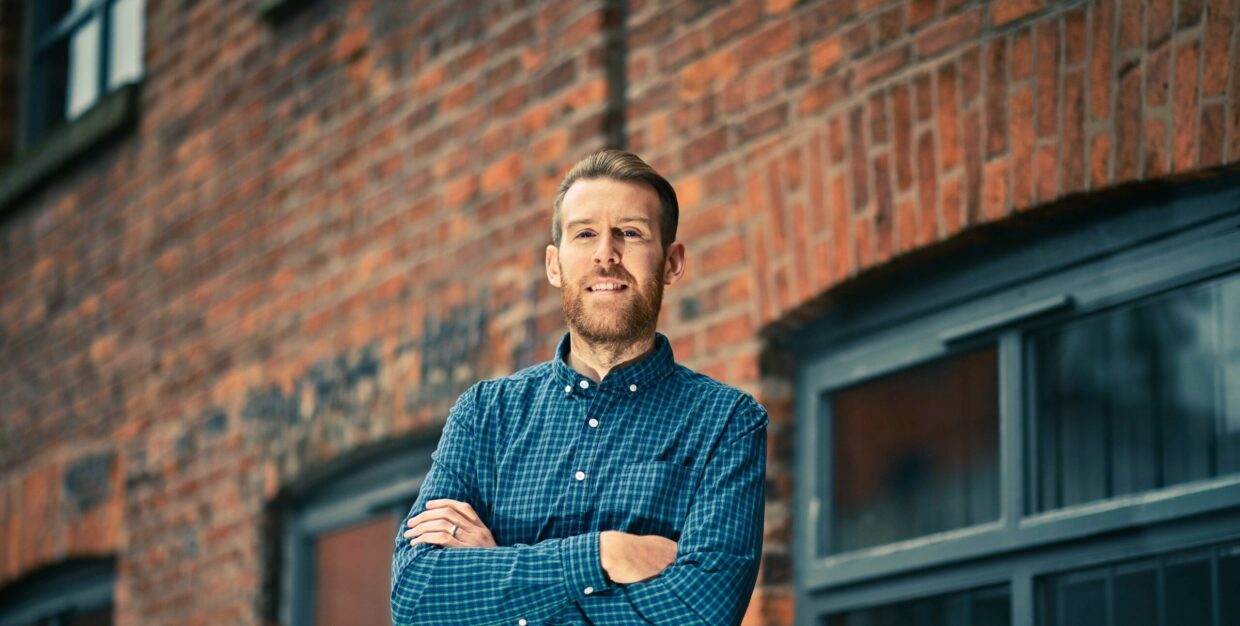
Making the move into an agency life

For most of the pandemic, I was on furlough which was both a blessing and a curse.

I missed work but my family needed me and, looking back now, I’m grateful for the time I had to plan the next step in my career. When I wasn’t home-schooling or inventing new games to play with my kids, I was pounding the streets, thinking about what I wanted to do post-Covid.

Towards the end of 2021, I was selected to participate in a Scottish Enterprise women in leadership programme. As part of this programme, I analysed my skills and developed my dream job criteria. When I revisited my notepad to write this blog, I can see the criteria I set out, once a list on a piece of paper, has become a reality in my new role at BIG; writing every day, working directly with clients, being part of a friendly and supportive community, helping others, using my creativity, and feeling challenged every day.

My experience prior to joining BIG, almost four months ago, was a mix of media and communications, client and stakeholder engagement and project management.

I trained as a journalist, completing an MA in broadcast journalism, followed by seven years working in factual television and radio for the BBC. I then spent 10 years managing international, multi-stakeholder projects with companies ranging from blue chip organisations such as Microsoft Corporation to SMEs, local authorities, health trusts and third sector organisations.

Before joining BIG I had no experience of working within an agency and I was worried it might be an obstacle to getting a new job. However, once I figured out that I wanted to work for an agency, I researched companies and spoke to people within my network. This enabled me to understand what was required to make the leap and which agencies had the best reputations.

When I saw a job at BIG on my LinkedIn feed, I had a gut feeling that this was the role for me. During my first interview I was certain that I wanted to be part of BIG, but I didn’t know if my lack of agency experience would get in the way. Being offered the job of Senior Account Manager was a dream come true, but the fear soon set in. I wasn’t sure if I’d master the skills required in agency quickly enough.  

Of course, it has been a steep learning curve and every day feels like a school day, but my previous experience and skills allowed me to dive in at the deep end.

From day one I was working with clients. I had to overcome my fear of asking for help because there are many things about agency life you can’t learn or experience until you are part of it. I ask for advice about something most days, reassured that there is always support available. I’ve felt part of the BIG community since day one – testament to its culture.

My experience in television and radio has been invaluable. Supporting clients with writing – anything from scripts for videos, to intranet articles, award entries, press releases and social media posts is a key part of my job. My project management and stakeholder engagement experience has been beneficial in organising and planning PR and communications and for working with the many stakeholders with whom BIG’s clients engage regularly.

Being highly organised, planning daily tasks, while looking ahead at the bigger picture has been crucial. The ability to think creatively to help BIG’s clients tell their stories in a compelling way is also key and team brainstorms ensure no avenue is left unexplored. It helps that I am committed to delivering the best work for my clients, team and the agency. I believe this is at the heart of BIG – everyone cares deeply about the work they create and their colleagues. This is a winning formula and ensures that everyone has the chance to reach their potential and do great work.

Why Center Parcs closure U-turn was not a PR disaster

Associate Director, Stewart Argo shares his thoughts on why Center Parcs U-turn on their decision was not a PR disaster.

For those that missed it, upmarket holiday camp company Center Parcs told its customers they’d have to leave their accommodation for the day of the Queen’s funeral. What a way to redefine ‘vacation’! Then a few hours later they changed their mind after the inevitable outcry.

This will probably be cited for years to come as a Terrible PR Disaster. I’m not so sure, and here’s why.

  1. It wasn’t a PR decision. Okay, this might sound like pedantry but it matters. It was an operational decision, presumably approved by those at the highest level of the company. The distinction I’m making is that an organisation’s reputation isn’t just a matter of what they say and how they say it, but what they do and how they do it. This is where reputation is really tested. Sure, PR is part of the mix; but it’s not the main determinant. (I’m speculating here but my guess is that the PR folk would have advised against the decision to close.)
  2. I’d be amazed if it makes any difference to their sales. Some people may never book again. Some people will find the whole thing unfortunate while still pressing ‘confirm booking’. Some people will regard them as a bit tainted but give it no more thought. But are we going to see a meaningful drop in bookings or spend? I seriously doubt it. That doesn’t mean of course that companies can blithely go around making all sorts of blunders. Center Parcs need to be extra careful for the foreseeable future otherwise a well-meaning single blip in corporate sensibility becomes something more serious.

Much better of course to avoid such situations completely. So, what could Center Parcs have done differently? (I recognise they may have done these things but I can only go by what we see from the outside.)

  1. Get some outside counsel from a trusted adviser. We often find that companies use PR consultancies such as ourselves for the benefit of that independent outside view. To many, we are a critical friend. In the jargon, we do ‘boundary spanning’: one foot in our client’s camp and one foot in the wider world. I imagine that if they had tried this decision out on others they would have had some helpful advice that would have prevented this nonsense.
  2. Prepare and test. I feel secure saying that Center Parcs doesn’t have a risk register that mentions a change in the monarchy as being something they need to deal with. That’s fair enough: it’s absurd to think an organisation can prepare for every eventuality, although many try to, producing rigid and impractical plans for specific scenarios. It is more effective to be ready for anything by creating and rehearsing flexible approaches. And while process is hugely important, it’s essential to remember understanding and empathy: an element that seems to be missing or at least severely skewed in Center Parcs’ handling.
  3. Recognise that corporate PR and stakeholder management can matter as much as consumer PR. We sometimes find that B2C companies are much less concerned about such issues because they don’t directly benefit their sales. That’s understandable. I even make the point above that I don’t think this will hurt them commercially. But can you imagine the scenes inside CP HQ this week? There is a cost, even if it’s just in managing the situation, taking valuable senior exec time away from other priorities.

My last thought is…apart from the commercials, do Center Parcs know what their reputation even is? How do they compare to their competitors, non-industry peers or indeed any of the country’s most-loved and most-valuable brands? You can’t measure a change in perception without a benchmark, and you can only do the benchmark before the incident or issue. Which means, even if only once a year, every company that values knowing where it stands among its competitors should carry out some basic reputation research.

Last night, BIG Partnership’s Media Relations Director, Charlene Sweeney, appeared on The Nine to share her expert opinion on what Center Parcs could have done differently and how she would have approached the situation – https://www.bbc.co.uk/iplayer/episode/m001c4q9/the-nine-14092022

Intern to Employee

I was always told that finding a job, or at least a job that I wanted to do, after university was a marathon, not a sprint. But add a global pandemic into the mix and that marathon began to look even more of an endurance test.

After graduating with a First-class degree from RGU in Public Relations, I was eager to get out there and start my career. But I quickly hit a roadblock – one which countless people my age hit. My lack of experience meant that I couldn’t get a job, but I couldn’t get that experience without a job.

After multiple rejections from marketing and PR agencies in and around Aberdeen, I applied for a three-month internship position at BIG Partnership. After sending in my application, I was invited to an ‘open day’ at the Aberdeen office, where myself and four other applicants were welcomed by the team. After a brief intro to BIG, we were divided into groups and set a task. This was a fun experience that let us work in teams and allowed us to have a peek at what an internship would be like (and obviously give the BIG team the low-down on the applicants).

A few days later, I received a call telling me that I had performed well and that BIG wanted to offer me an internship, I was thrilled! A week later I started my new job as a PR Intern at BIG, alongside two other applicants. The first few days went by quickly and there was a lot of information to take in as I had never worked in a PR agency before. Everyone was very accommodating and carefully walked myself and the others through our tasks.

Gradually, I became more confident in my role, and was given more responsibilities, not least of which was figuring out a way to meet everyone’s tastes in pizza and snacks for our Friday BIG Bar socials!

I began doing a little bit of everything including coverage tracking, research, writing and social media content planning. On several occasions, I had opportunities to get out of the office and meet clients face-to-face, something I hope to do more as time goes on. A particular highlight was seeing press releases, that I had written, picked up in the media.

About halfway through my internship, I was told that it had been extended to six months. After having a taste of life in a PR agency, I was enjoying it too much to give it up. Getting the extension meant that I could continue gaining experience and working with the team that had taken me in, looked after me so well and taught me so much. However, the question still remained, what would happen once the six months was up?

Four months to the day after I started as an intern at BIG, I was offered a full-time position as an Account Executive – an offer I couldn’t refuse. This position will allow me to get even more involved with the clients that I have been working with and to fully integrate myself as a permanent part of the BIG team. I’m sure there will be “big” things to come.

Agency goes on BIG recruitment drive on the back of major client wins

We are on the hunt for the UK’s best talent, as a result of a flurry of new client wins, with more than 15 client wins in the last quarter alone.

As a result of this success and having already welcomed ten new recruits in the last 6 weeks, BIG is on a fresh recruitment drive with plans to fill at least 15 further positions, across all UK offices, over the next couple of months.

The new roles include account handlers, senior communication & media advisors, as well as creative studio positions, such as graphic designers, artworkers, a motion graphics lead and a head of design.

BIG’s most recent win will see the agency work with Morris Homes, one of the UK’s largest and most respected independently owned house builders. Following a three-way pitch, BIG was appointed lead creative agency for the brand, which will see it support Morris developments across the UK with creative, strategy and campaign delivery.

Other new clients include X-Academy, INEOS, CTS, Graph Strategy, Limerston Capital, Global Underwater Hub, NHS Grampian, Renaissance Care, Matthew Algie, Wellhouse Housing Association, and UK music and dementia charity, Playlist for Life.

The team has also been working with major restaurant chain, Fridays UK to support the launch of its new restaurant concept, 63rd+1st in both Scotland and England, as part of a brief that requires media relations, influencer strategy, and event management.

CEO, Allan Barr, added: “There is no better feeling than seeing a vision being brought to life by our hugely committed and talented team. 

“With so many new wins, it is the perfect time for new recruits to join in the fun. So, we are on the hunt for the ‘best of the best’ talent, to be a part of the BIG journey and to enjoy all of the benefits that come with a career at one of the U.K.’s leading agencies

“We are really encouraged by our successes so far this year. To be able to win new clients as well as receive lots of briefs on new projects from existing clients shows the confidence that is being put back into marketing spend.

“We have certainly seen a change in approach from clients who are daring to be different again after a challenging and restrictive year in 2020; this makes our future planning even more exciting.”

Rob McCann, BIG’s head of Manchester added: “The Morris Homes win is a huge one for us and reflects the commitment that we have to driving forward the agency’s ambitious UK growth plan. 

“With the full-service offer that BIG has, there’s no team better equipped to deliver the brief and turn our ideas into reality.”

BIG Partnership appoints Head of Public Affairs

Former senior SNP aide Paul Robertson to strengthen public affairs practice.

The Big Partnership have appointed Paul Robertson in a new position of Head of Public Affairs to strengthen the agency’s public affairs practice. Paul joins BIG from top-ten London consultancy Portland, where he spent four years advising major corporate clients on public affairs and strategic communications.

At BIG, Paul will work across the agency’s offices to strengthen its public affairs advice and support to clients, and to grow BIG’s public affairs offer to new clients.

Prior to working at Portland, Paul was the Scottish National Party’s Head of Research & Policy in Westminster and played a key role in building the party’s operations in London. He was responsible for developing policy and political strategy on reserved issues, and was a senior aide to successive SNP leaders in Westminster.

Commenting on the appointment, BIG’s Chief Executive Allan Barr said: “Paul’s appointment is a significant investment in the future of our business. He is an accomplished and highly respected public affairs practitioner who is well-placed to lead the development of a growing part of BIG’s business and our offer to clients.”

“As we emerge from the pandemic and attention turns to economic recovery, Paul’s extensive knowledge and insight into Scotland’s political and regulatory landscape will be an invaluable support for our clients looking to build connections and partnership with Government.”

Paul added: “BIG is an exciting agency that is trusted by clients with some of the most high-profile challenges in the media and policy landscape in Scotland today. I’m thrilled to be able to add my skills and experience to the impressive range of services and expertise that BIG offers to current and prospective clients.”

BIG Partnership appoints Head of Public Affairs

Former senior SNP aide Paul Robertson to strengthen public affairs practice.

The Big Partnership have appointed Paul Robertson in a new position of Head of Public Affairs to strengthen the agency’s public affairs practice. Paul joins BIG from top-ten London consultancy Portland, where he spent four years advising major corporate clients on public affairs and strategic communications.

At BIG, Paul will work across the agency’s offices to strengthen its public affairs advice and support to clients, and to grow BIG’s public affairs offer to new clients.

Prior to working at Portland, Paul was the Scottish National Party’s Head of Research & Policy in Westminster and played a key role in building the party’s operations in London. He was responsible for developing policy and political strategy on reserved issues, and was a senior aide to successive SNP leaders in Westminster.

Commenting on the appointment, BIG’s Chief Executive Allan Barr said: “Paul’s appointment is a significant investment in the future of our business. He is an accomplished and highly respected public affairs practitioner who is well-placed to lead the development of a growing part of BIG’s business and our offer to clients.”

“As we emerge from the pandemic and attention turns to economic recovery, Paul’s extensive knowledge and insight into Scotland’s political and regulatory landscape will be an invaluable support for our clients looking to build connections and partnership with Government.”

Paul added: “BIG is an exciting agency that is trusted by clients with some of the most high-profile challenges in the media and policy landscape in Scotland today. I’m thrilled to be able to add my skills and experience to the impressive range of services and expertise that BIG offers to current and prospective clients.”

A lovely finish for BIG in Crown Paints pitch

Crown Paints, the painting and coatings brand, has picked full-service marketing agency BIG Partnership to look after its trade PR and social media brief after a three-way pitch.

Under the contract, BIG will help Crown Paints grow its brand presence with the important architect and design community, as well as supporting its trade brands for professional painters and decorators. The brief also covers an ambitious new retail strategy for a series of new and existing Crown Decorating Centres across the UK.  

Crown Paints has a 200-year heritage, having been founded in 1777 in the town of Darwen, where it is still headquartered today. It is part of international coatings specialist Hempel Group, owned by the Hempel Foundation, which supports cultural, humanitarian and scientific causes around the world.

BIG’s Manchester team will lead the Crown Paints account.

Rob McCann, BIG’s Head of Manchester, said: “Crown is a brilliant brand and one the whole team was really excited about working on. It’s a fascinating business with some really exciting ambitions, so we can’t wait to take some of our ideas and make them a reality.

“Our team worked incredibly hard to deliver a great pitch and it’s always nice to see that result in a win.”

Katie McLean, Crown Paints marketing director, said: “As well as a great pitch, the BIG team showed real enthusiasm for working with us and really understood our industry and what we’re trying to achieve.

“We loved that BIG had put so much effort into their research and interpretation of the brief, and clearly went above and beyond to provide a really impressive pitch with some great ideas.”

BIG hires new board director to head up Manchester office

BIG Partnership, the UK marketing and communications agency, has appointed Rob McCann as head of its Manchester office as it plans to ramp up investment in the North of England. 

Rob joins the 95-strong agency as a board director and will work closely with BIG’s existing board to drive forward the agency’s ambitious growth plans across the UK. 


Coming to BIG from his previous role as head of client services at Manchester agency BBI, and prior to that Yorkshire agency Jaywing, Rob brings more than a decade of agency experience across integrated marketing, digital and communications. His previous clients include Sky, BT Sports, Hoover, Halfords, DW Sports, ADT and Jewson.  

BIG’s CEO, Allan Barr, said: “Rob’s appointment represents a major signing for our agency. He is a well-known and highly respected figure within the North-West agency scene and brings a huge amount of experience in successfully leading integrated accounts for a multitude of household brands. 

“I’m excited by Rob’s vision for BIG in Manchester. He has a proven track record of creating major campaigns that have delivered impressive results for clients and we believe he is the right person to lead our operations in the North West. We’re backing him with a major investment to significantly ramp up our Manchester team and he’s already identified several key signings that we’ll be unveiling in the coming weeks.” 

Rob McCann said: “I’ve been keeping an eye on BIG’s Manchester office for a few years now. From a standing start, it’s grown to become one of the UK’s largest independent agencies and one of only a few who can truly boast a full-service offering to its clients. Once I learned of its plans to significantly ramp up its base in the city, I jumped at the chance to become a part of that journey.


“As the industry evolves, I believe we are seeing a trend in clients looking to benefit from the economies of scale and efficiencies that come with having a single agency partner to cover all their marketing and communications needs. Clients often don’t have the time to brief multiple agencies and deal with what can be competing interests. As a full-service agency, I believe BIG is ideally placed to capitalise on that shift.” 

BIG provides PR, marketing, digital, public affairs, design and events to more than 350 clients nationwide, from offices in Manchester, Glasgow, Aberdeen and Edinburgh. Clients include the likes of Apple, Red Bull, NatWest, Peel Ports, The Macallan and Aldi.   

Why media training matters for your communications strategy 

Few moments illustrate the importance of media training more vividly than Prince Andrew’s car crash 2019 BBC interview

Intended to clear his name, the sit-down with Newsnight instead became a case study in how unprepared messaging and poor delivery can irreparably damage a reputation. Every pause, every phrase, every misplaced attempt at reassurance became the headline.  

As his bombshell performance yet again makes headlines for all the wrong reasons, the lesson for anyone who engages with journalists couldn’t be clearer. Media appearances demand intensive preparation, discipline and a strong understanding of how journalists work. Some people are naturally very confident and capable in front of a camera in difficult situations. The truth is that most of us are not. 

The value of preparation 

That said, media training isn’t about turning people into slick spokespeople. It’s about helping them communicate clearly, concisely and confidently – particularly under pressure. The vast majority of journalists aren’t out to trip people up; they have a job to do, just like the rest of us. And their job is to find interviewees who provide clarity and insight that help audiences make sense of complex issues. 


The best interviewees understand this dynamic. They know what their key messages are, how to express them in human terms, and how to stay focused even when questions stray off-course.  

When a spokesperson hasn’t had this preparation, interviews can quickly unravel. What feels conversational in the moment can sound defensive or inconsistent when replayed. Training builds awareness of tone, pace, body language and message discipline – all essential to building trust with an audience. 

When it matters most 

Media engagement plays a pivotal role in a wide range of business scenarios – and they’re not necessarily crisis situations. Launching new products or services, distilling reports or analysis into usable information, and simply providing balance are all examples of when putting forward spokespeople can have positive impact. On the other hand, if a serious incident occurs, a human face will reassure stakeholders and demonstrate accountability when it matters most. 

A win-win for business 

Engaging with the media should be seen as an opportunity, not a risk. Well-executed interviews can strengthen a company’s reputation, boost brand awareness and establish its people as credible experts in their field. By offering clear, well-informed commentary, businesses help shape the narrative around their industry while showing leadership and openness. Over the long-term, sharing valuable insight builds a level of trust and authority which can’t be achieved through advertising alone. 

Making media work for you 

As Prince Andrew has shown, if you or your organisation becomes the centre of a story the media spotlight will find you, whether you want to be in it or not. The question is whether you’ll be ready when it does. Incorporating media training into your communications strategy isn’t a nice-to-do when the time is right; it’s an essential safeguard and can provide businesses with a strategic advantage over competitors – because if you aren’t out there explaining your sector or telling people about what you do, another business will take your place. 

In today’s fast-moving media landscape, preparing appropriately is the difference between being quoted, and being remembered for all the wrong reasons.

Why media training is a must-have for your communications strategy

We’ve all seen them – the cringeworthy interviews from politicians, chief execs or celebrities who are being torn apart by the big, bad journalists. We sit watching with our hands over our mouths, unable to take our eyes off the screen.

Some zingers that spring to mind include Emily Maitlis’s televised interview with Prince Andrew, or former PM Theresa May’s sit down with Andrew Neil on social care costs.

For us PRs, it’s hard to watch and not think: “Why on earth didn’t they get proper training before they were put in the hot seat?”

Media training is crucial for anyone who may have to interact with journalists, whether it’s for television, radio or print. What’s more, it’s not just important for the bad stories or the crisis situations, it is also essential when it comes to making the most of positive communications. The goal of media training is always to prepare you as well as possible for all forms of questioning, allowing you to communicate with your audience effectively and ensuring you get the right messages across to them.

Now, it can be nerve-wracking to be interviewed by a journalist, whatever the topic. It’s natural to worry they’ll throw you a curveball or that you’ll say the wrong thing.

With many journalists now working remotely and with face-to-face interviews currently on pause, it can be even more challenging to get a feel for how you’re doing. It is difficult to read someone’s body language on a video call and it can be tricky to answer questions if your Wi-Fi is acting up.

But, with the right training and a cool head, taking part in interviews remains one of the most effective ways to build profile, manage reputation and interact with your key audiences.

Like any other skill, good interview technique needs to be worked on. It’s like a muscle that needs to be exercised; the more you do it, the better you become. It’s not just about learning your answers word for word – let’s not forget this corker from Ed Milliband – but being able to adjust your messaging depending on the tone and approach of your interviewer. Your body language and facial expressions are important too, and not just when there’s a TV camera in the room. The more practice you get, the more confident you will feel.

In an age where the news agenda is moving 24/7 and a tweet can be tomorrow’s headline, taking time for some professional coaching is like having a form of guarantee – you’ll always do better if you’ve taken time to prepare.

We live in a super-connected world where news travels incredibly quickly. Media training will always be essential, and has never been more important than it is today.

We all know what a bad interview can do to a brand or business, so why risk it? BIG’s experienced media training team is led by ex-journalists and PR veterans who deal with the media on a daily basis. From breathing techniques that’ll help you focus, to the way you frame an answer to a difficult question, we’ll teach you everything you need to know to go into any interview feeling confident and ready for action.

Want to know more? Get in touch.