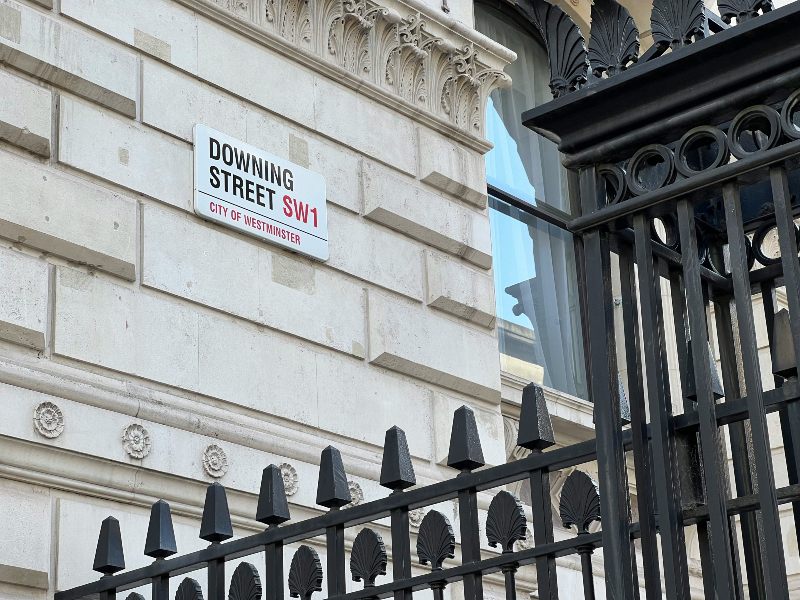
Delivering his first Budget as Chancellor, John Healey faced a familiar problem that has plagued most of his recent predecessors: how to convince the country that better days lie ahead when there is precious little money to make them happen.
The harsh truth is that the global picture is incredibly turbulent, and the UK no longer possesses the economic power to ignore that reality. The war in Iran, Russia’s invasion of Ukraine, high borrowing costs and Britain’s debt burden after years of economic shocks have left the Treasury with little room for manoeuvre. The conflict in the Middle East has added around £14 billion to debt interest costs this year, while the Chancellor’s fiscal headroom has fallen to £15 billion.
Any Chancellor contemplating drastic reform must also remember what happened to Liz Truss and Kwasi Kwarteng in 2022. Whatever the political appeal of radical change, it becomes less attractive when the markets decide they’re not willing to pay for it.
So, Healey opted to deliver what the BBC’s Chris Mason called ‘a flotilla of small measures.’ An extension of the electricity VAT cut, a further fuel duty freeze, £100 towards energy costs for eligible households in England, higher minimum wages and the removal of tariffs on everyday products. Individually, none will transform the economic outlook. Collectively, however, they could make a difference to how people feel about their finances, and that may be the most important political calculation behind this Budget.
Most voters do not spend their evenings examining OBR forecasts or worrying about fiscal headroom. They notice the cost of heating their homes, filling their cars and doing the weekly shop. Small, visible improvements to household finances can carry more political weight than grand announcements about economic transformation, particularly when that transformation never seems to arrive.
There is an economic argument here too. If households feel less anxious about their finances, they may be more willing to spend. If consumers spend, businesses have more reason to invest. It’s hardly a guaranteed route to growth, and temporary support is no substitute for addressing Britain’s structural problems, but improving consumer confidence would be no small achievement.
It is also impossible to separate this Budget from the growing speculation over an early general election.
Andy Burnham has repeatedly rejected the idea, and in interviews after the Budget ruled out the prospect of an election in 2027. Nevertheless, the Westminster bubble is openly speculating about the prospects of an early election, possibly as soon as next May. The attraction, in theory, is clear. Burnham inherited a parliamentary majority won on Labour’s 2024 manifesto, complete with fiscal commitments that constrain what his government can do – not to mention an army of backbenchers anxious at the prospect of losing their seats. A fresh mandate could give him greater scope to pursue more radical reform he clearly has an eye on, such as scrapping the triple lock on pensions, amending the electoral system and even possibly rejoining the EU.
That doesn’t mean an election is definitely in the works. While a snap election might have worked when Boris Johnson wanted to ‘Get Brexit Done’, Burnham will be acutely aware of how voters reacted to Theresa May when she sought her own mandate in 2017. But a Budget offering immediate, recognisable relief without frightening the markets could prove useful political groundwork if circumstances – or the PM’s calculations – change. A slight uptick in public confidence and sustained lead in the polls might just give him the encouragement he needs to take the risk.
For business generally, the immediate message is reassuringly uneventful. There are targeted tax changes and support for particular sectors, but no sweeping increase in headline corporation tax or wholesale rewriting of the rules. After years of economic shocks and political uncertainty, predictability has a value of its own.
But business as usual should not be mistaken for business is booming. Fiscal headroom is thin, much of the household relief measures expire in 2027 and the Spending Review still must settle difficult questions about defence, public services and social care. The Conservative attack line that Kemi Badenoch deployed in response to the statement – ‘is that it?’ – might well resonate with voters and businesses hoping for a bolder vision than the Chancellor was willing or financially able to deliver.
For organisations dependent on public spending, regulation or government support, the most consequential decisions still lie ahead. In Scotland, too, the debate on how additional funding through the Barnett formula will be used is only just starting.
Healey and Burnham will hope that modest improvements restore confidence, maintain their popularity and buy themselves some time for the bigger and bolder decisions. Whether those decisions arrive after a Spending Review or an election remains to be seen.
For now, the country is being asked to prepare for further international uncertainty while being promised small supportive measures in return and the assurance of wider reform to come. It may not be the economic revolution anyone imagined just yet, but the UK Government’s message for now is simply this: batten down the hatches, keep calm and better days will be ahead.
Talk to BIG’s public affairs team by emailing us at [email protected]